
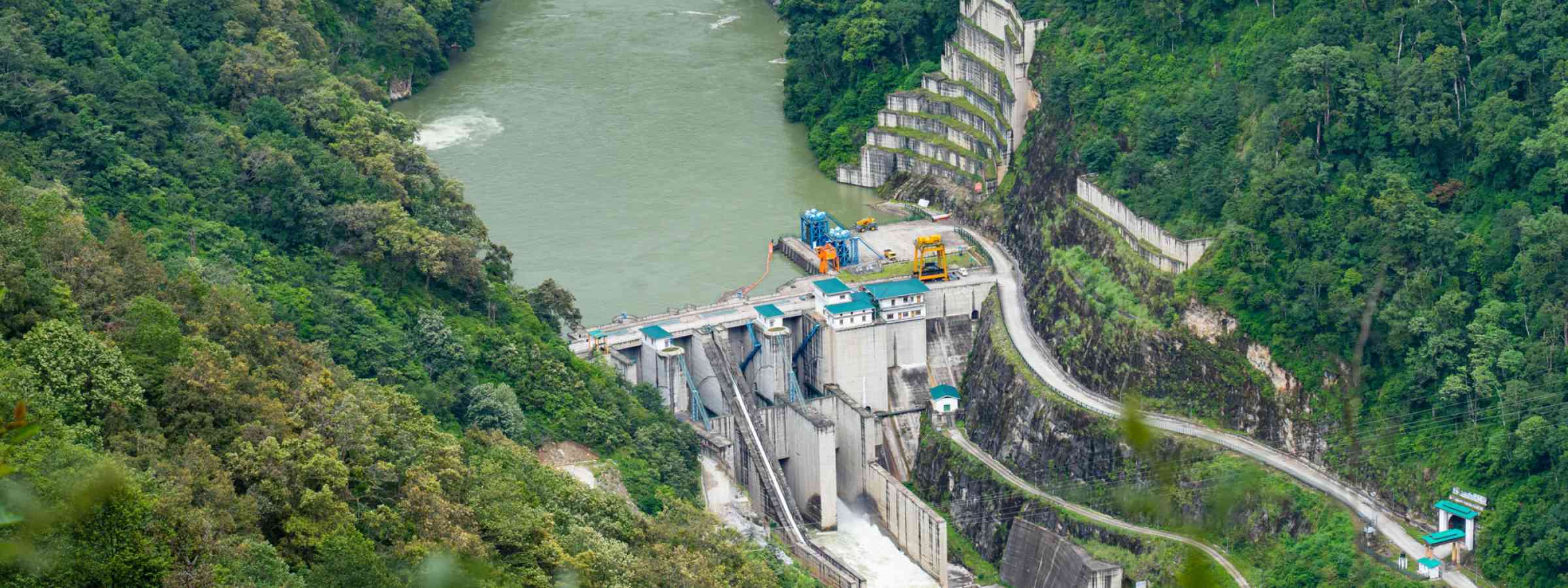
Nestled in the eastern Himalayas, Bhutan is a small, landlocked Buddhist kingdom bordered by India and China. Known for its monasteries, fortresses and dramatic scenery, its landscapes range from subtropical plains to steep mountains and valleys. One of its mountains, Gangkhar Puensum, is the highest unclimbed mountain in the world.
This mountainous terrain brings both challenges and opportunities. The abundant water resources and limited population of less than one million, for example, means that the country’s hydropower sector can generate enough electricity for almost 100 percent of its population, exporting the surplus to India. Combined with the revenues from tourism, Bhutan has been able to invest in its people, providing free education and healthcare, while reducing extreme poverty and promoting gender equality too.
On the other hand, Bhutan’s geography - its scattered population, high altitudes, and narrow valleys - also complicates socio-economic development since it increases the country’s vulnerability to a range of risks such as floods, earthquakes, landslides, and even droughts during the dry season. Since Bhutan relies on water for energy and agriculture, which are key sources of both revenue and employment, climate change will likely bring a range of more intense and frequent hazards.
Exposure and Vulnerability of Infrastructure Systems for Hazards

To reduce the risks of disaster damage to its infrastructure and continue its socioeconomic development, Bhutan joined Chile, Madagascar, and Tonga, as one of four countries pioneering the Global Methodology for Infrastructure Resilience Review [link once it’s available]. Developed by the UN Office for Disaster Risk Reduction (UNDRR) and the Coalition for Disaster Resilient Infrastructure (CDRI), the methodology helps countries to identify and prioritize the strategies that will enhance the resilience of their infrastructure.
1
Stakeholder mapping

- Key ministries, regulators and operators in infrastructure development
- Cross-sector coordination mechanisms
2
Review of existing policies and regulations

- Policies and regulations shaping infrastructure resilience
- Integration of disaster risks in national plans and strategies
3
Identification of vulnerabilities (Stress Testing)

- Data collection on hazards and vulnerabilities
- Multi-hazard resilience testing of infrastructure systems
4
Principles for resilient infrastructure

- Infrastructure resilience assessment using the UNDRR Resilience Principles
- Identification of resilience-building interventions
5
Development of an Implementation plan

- Results validation and prioritization
- Implementation plan with assigned responsibilities
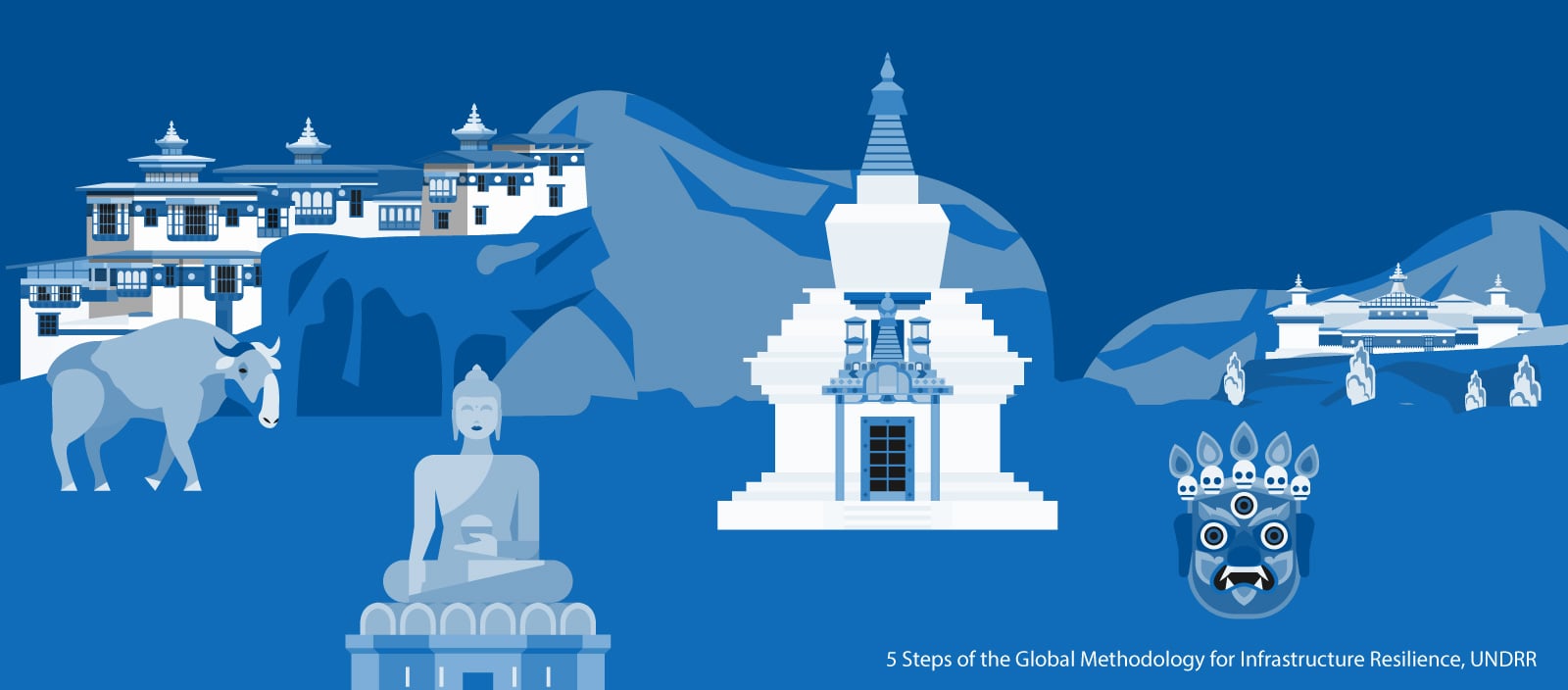
Using this process, Bhutan developed its National Plan for Infrastructure Resilience, outlining the key hazards for its infrastructure, as well as the necessary strategies and actions to mitigate disaster risk.
“COVID-19 showed us how fragile the progress can be,” Thinley Norbu, Chief Program Officer, Department of Local Governance and Disaster Management says. “Climate change also brings new risk and uncertainty and we must therefore find new ways to protect our vital infrastructure.”

“That is why we were so keen to develop this national plan for infrastructure resilience.”

Advancing Infrastructure Resilience in Bhutan
- Aligning with the five year plan
Aligning with the five year plan
Bhutan’s journey began by mapping the key stakeholders – including 21 agencies across seven ministries - and engaging with them in a series of workshops.
In steps two and three of the Global Methodology, Bhutan’s policies and regulations were reviewed, then stakeholders analyzed the vulnerabilities across six key sectors – transport, energy, water, and information, communication, and technology (ICT), as well as health and education. The stakeholders focused on 10 key hazards.
In step four, stakeholders then evaluated Bhutan’s infrastructure resilience against UNDRR’s Principles for Resilient Infrastructure, which sets out the key conditions for sustainable infrastructure resilience. By complying with the six Principles for Resilient Infrastructure, Bhutan’s infrastructure would support the Sendai Framework for Disaster Risk Reduction as well as the Sustainable Development Goals and G20 Principles for Investing in Quality Infrastructure.
In step five, an implementation plan is developed using information and analysis from the early steps. Stakeholders later validated this plan, the Bhutan National Plan for Infrastructure Resilience, via extensive consultation in order to ensure broad support and alignment with national policies, specifically Bhutan’s 13th Five Year Plan, 2024-2029.

When stakeholders agreed to incorporate recommendations of the National Plan into their own sectoral plans, they were therefore also agreeing to support implementation of Bhutan’s 13th Five Year Plan.
These recommendations and action plan were both cross-sectoral and sector-specific. One core recommendation, for example, was to build technical capacities for Geographic Information Systems (GIS), remote sensing surveying, and climate-resilient infrastructure design.
It was also recommended that a national database be developed in order to track critical infrastructure systems and performance, share key infrastructure data across sectors, and improve decision-making and infrastructure services continuity.“Actually, we had already begun to develop a national platform for infrastructure data,” Thakur Timsina, Assistant ICTO, GovTech Agency says. “But before we started the Assessment, we did not really understand the different needs of every sector or even how the platform can help.”

“That helped us to improve the platform,” he said, explaining how the database will help Bhutan to monitor the quality and condition of existing assets, highlighting the bits of infrastructure which are most in need of support and of preventive maintenance.
- Protecting water from growing risks
Protecting water from growing risks
The database may be especially valuable to the water sector – one of the key sectors examined – since managing Bhutan’s water resources involves multiple agencies with challenging inter-agency coordination.
Bhutan receives abundant monsoon rains, but the steep terrain means that this water quickly drains away, generating significant water shortages during the dry months. The combination of expanded irrigation, urbanization, and water-dependent industries means that water scarcity and demand are rising. The need to address these challenges has become an urgent issue.
Water Supply Vulnerability & Exposure to Hazards
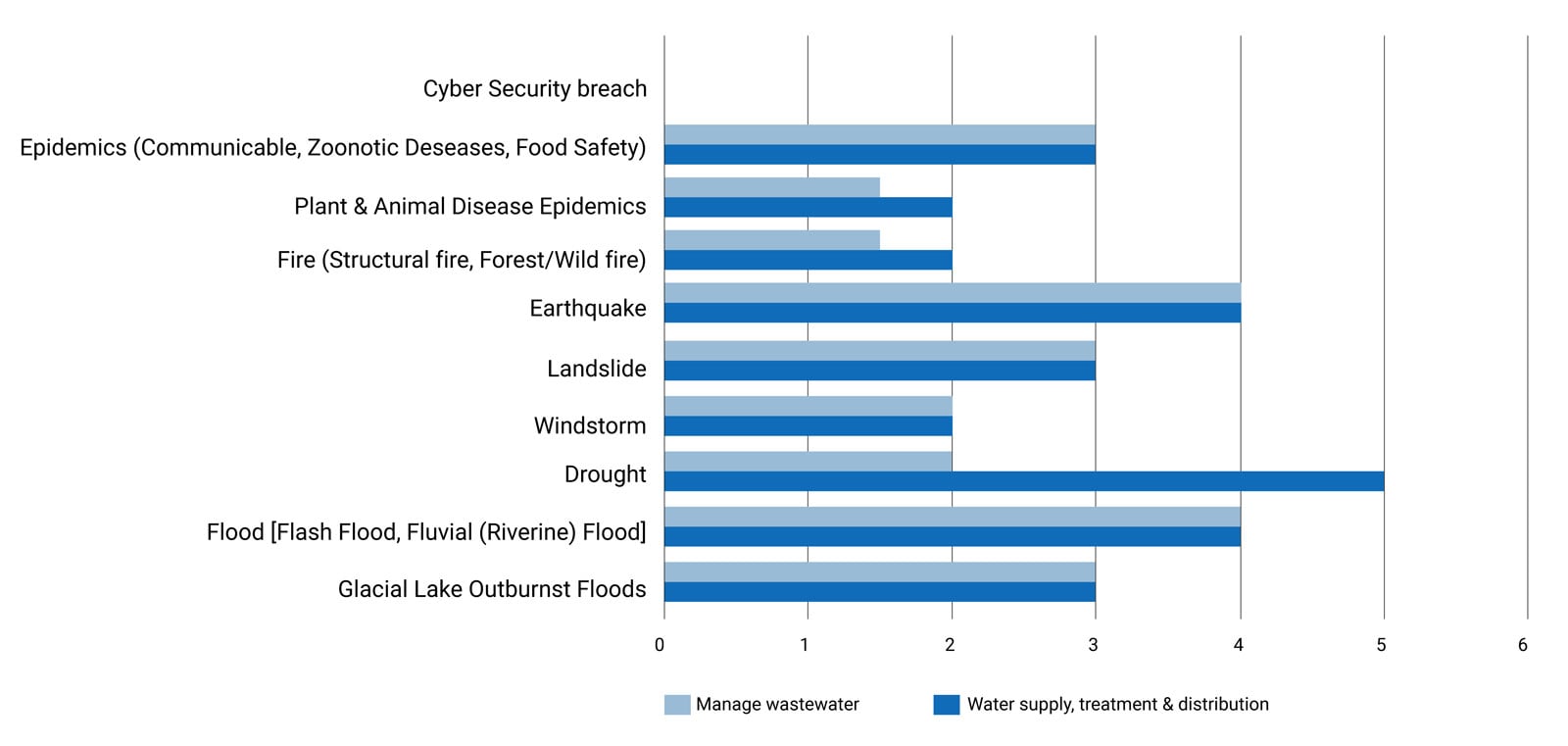
Click to download the Interdependencies of Functions and Cascading Effects chart in PDF
Climate change is expected to place even further pressure on Bhutan’s water resources by increasing the frequency and intensity of extreme weather events. The stress test analysis identified drought as the most significant risk to water supply, affecting households, agriculture, water-based industries, and public health. Other hazards, such as floods, glacial lake outburst floods (GLOF), earthquakes, landslides and waterborne epidemics, also present significant risks.
Water Supply Dependencies on Other Critical Functions
HIGH
MANAGE WASTEWATER
Mainly related to water quality issues from runoff and seepage of unmanaged wastewater.
BUILD AND MAINTAIN SCHOOLS FACILITIES
BUILD AND MAINTAIN HEALTHCARE FACILITIES
While healthcare facilities are highly dependent on water supply, the health sector also provides water supply and sanitation services including water testing services through its WASH programme.
MEDIUM
TRANSPORT CARGO AND PASSENGERS BY AIR
Any disruption in cargo and passenger transport will affect access to water infrastructure including O&M.
BUILD AND MAINTAIN BRIDGES AND TUNNELS
Access to water infrastructure including O&M.
GENERATE AND TRANSMIT
At the household level, water supply uses electricity-powered pumps and therefore, failures in electricity supply will disrupt water supply.
PROVIDE INTERNET ROUTING, ACCESS, AND CONNECTION
As water supply moves towards automation, its functions including communication are dependent on internet connectivity and mobile networks including O&M.
Meanwhile, the analysis further showed that Bhutan’s water supply is vulnerable to cascading risks in the transport, electricity and ICT sectors, meaning that any disruptions to these functions could also impact the supply of water. In addition, a comprehensive assessment of the water sector was conducted, bringing together key water infrastructure stakeholders to discuss challenges and resilience needs.
To address these vulnerabilities, the National Plan recommended targeted solutions for Bhutan’s risk management strategies in the water sector. Bhutan currently lacks a comprehensive understanding of its water resources, including the supply, quality, and condition of its water. To address this, the plan recommends a GIS-based inventory of the country’s water and wastewater infrastructure. In addition, it suggests an assessment of the drying water sources as well as the creation of a plan to restore springs and take proactive measures to protect the sources at risk.
“The water management in our cities is good, but the quality varies in our rural areas,” Tenzin Choden, Deputy Chief Program Officer, Department of Local Governance and Disaster Management says.
“During the Assessment process, we had good discussions about how to use our water better and how to coordinate more effectively between urban and rural areas.”

The National Plan also recommends that water and wastewater infrastructure should be made more resilient through targeted investments that account for climate risks, safety, and redundancy. The proposed activities include updating infrastructure standards to align with the ASCE (American Society of Civil Engineers) Risk Category IV or an equivalent national standard, accessing climate and development funds, and strengthening financial capacity to meet the requirements of operations and maintenance.
- Building energy resilience
Building energy resilience
Water also plays a vital role in Bhutan’s hydropower sector, which serves as the backbone of both its energy generation and exports.
Some 70%
of the energy generated is exported to India.
Hydropower revenues
account for about 25% of the total government revenue.
Offsetting Bhutan’s
balance of payments with India and accounting for roughly 7.5% of Bhutan’s GDP.
Indeed, Bhutan’s human and economic development is closely tied to the growth of its hydropower. Some 99.7 percent of households have access to electricity, which is also essential for hospitals, schools, and communication networks. Besides supporting domestic sectors, hydropower also enables industrial growth.
But Bhutan’s hydropower sector faces increasing risks linked to the growing challenges to its water supply. Climate change is expected to exacerbate challenges such as droughts, glacial lake outburst floods (GLOFs), heavy rainfall, and flash floods. Additionally, Bhutan’s seismic activity makes hydropower assets vulnerable to loss and damage.
The country’s electricity transmission and distribution network is also at risk from geological events like earthquakes and landslides, as well as from fires and flash floods. At the same time, this network itself is a potential fire hazard, which could endanger surrounding infrastructure, settlements and forests.
The Assessment identified several resilience measures, including some which are already well-advanced and which reflect a proactive approach to risk reduction. Bhutan is exploring investments into reservoirs and pumped storage projects, for example, to increase its water storage capacity.
However, the Assessment also highlighted several areas for improvement. It noted gaps in grid stability, real-time monitoring, and the ability to respond quickly to transmission and distribution outages. To address these challenges, the assessment recommended upgrades to safety standards and the introduction of mandatory risk reporting as a regulatory requirement for electricity transmission and distribution. Establishing feedback loops and mechanisms will also help to improve the network’s resilience.- Next steps
Next steps
With multiple recommendations in the National Plan, stakeholders from government, business, and the state-owned enterprises worked together to identify priority recommendations. Prioritization was based on national resilience objectives and specific sectoral needs that align with sector priorities outlined in the Five Year Plan.
Some stakeholders expressed their hope for the data platform to be successful and to expand it to include new sectors and new hazard risks as resources become available.
“Bhutan is a small country, but if a mountain road is cut off by a landslide, then it can take several hours or even days to get from one village to the next,” Sonam Jamtsho, Deputy Executive Engineer, Department of Surface Transport, Ministry of Infrastructure and Transport says.

“When we combine different data sets with satellite locations, however, then we will be better able to understand the risks and to reduce the risk of disaster.”

Download the full report:
Roadmap for Infrastructure Resilience in Bhutan