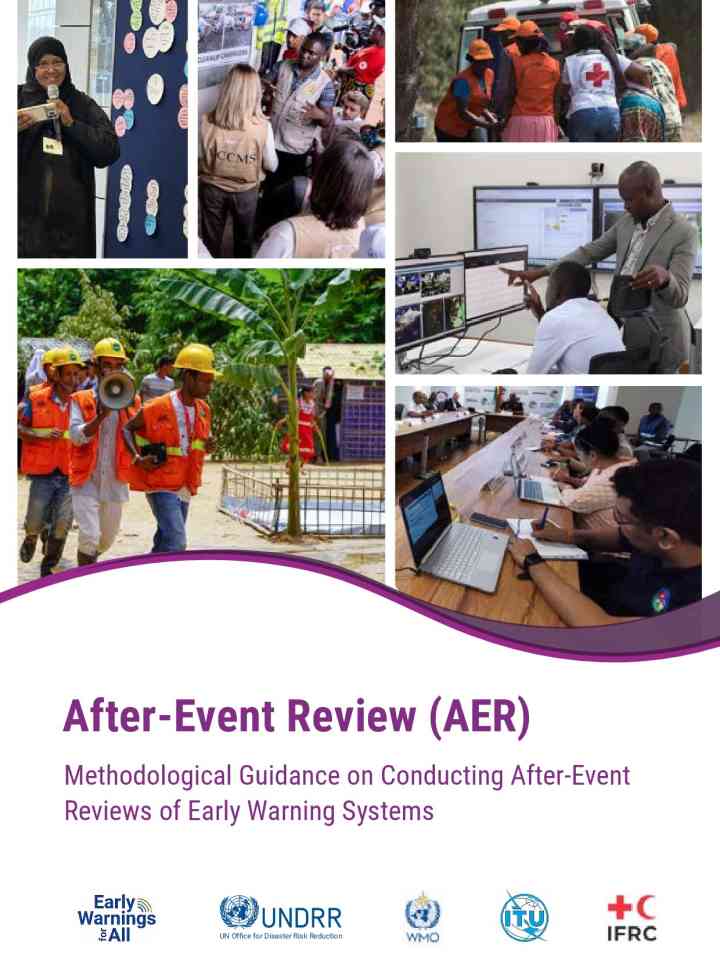
After-Event Review (AER): Methodological guidance on conducting after-event reviews of Early Warning Systems
The publication introduces a structured approach used to assess the performance of an EWS after a disaster or hazardous event. The AER provides a comprehensive analysis of how conditions were monitored and predicted, forecasts issued, warnings disseminated, and how communication and coordination supported timely and appropriate responses. While some countries and agencies have established mechanisms to review major hazardous events, many do not yet have systematic methodologies or institutional arrangements in place. The AER methodology document has therefore been developed to address this gap by providing a practical, structured and learning-oriented framework to guide countries and stakeholders in conducting comprehensive and consistent reviews of EWS performance after hazardous events.
The AER methodology emphasizes learning and improvement rather than assigning blame or managing reputational concerns. It fosters a constructive, non-punitive environment where decision makers can objectively assess what worked, what did not, and what adjustments are needed. Strengthening an EWS requires a holistic approach to addressing interconnected gaps across the EWS value cycle. This involves advancing risk knowledge, strengthening the coverage and reliability of observation and forecasting systems, enhancing institutional coordination, ensuring inclusive and accessible warning dissemination and communication, linking preparedness with response, and securing sustainable financing alongside strategic investments in appropriate technology.