
Workshop on gender and disability-inclusive implementation of the Sendai Framework for Disaster Risk Reduction for Comoros

A three-day national workshop on Gender and Disability-Inclusive Implementation of the Sendai Framework for Disaster Risk Reduction (DRR) opened today in Moroni, bringing together government officials, development partners, civil society organizations, women’s groups, and organizations of persons with disabilities (OPDs) to strengthen inclusive disaster risk governance in Comoros.
Organized by the Government of the Union of the Comoros, with the support of the United Nations Office for Disaster Risk Reduction (UNDRR), the workshop aims to enhance national capacity to integrate gender equality, disability inclusion and social inclusion (GEDSI) into DRR policies, strategies and implementation, in line with the Sendai Framework for Disaster Risk Reduction 2015–2030 and its Gender Action Plan (GAP).
Disasters are not gender-neutral
In his opening remarks, Raidan Al Saqqaf, Deputy Chief of Office, UNDRR Regional Office for Arab States (ROAS), underscored that disasters disproportionately affect women, girls and persons with disabilities, particularly in Small Island Developing States (SIDS) such as Comoros.
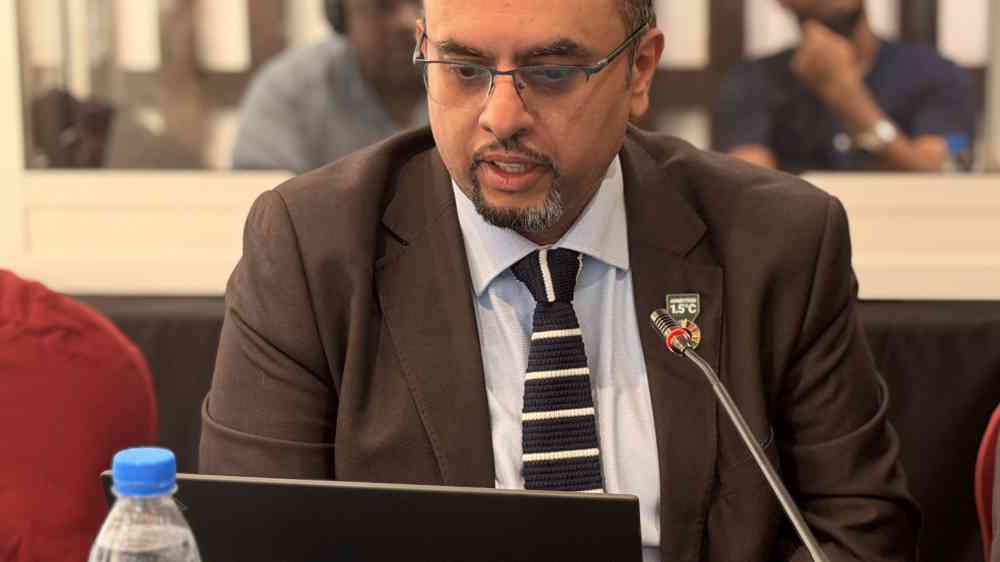
“Disasters are never neutral. They exacerbate existing inequalities and expose the most vulnerable to disproportionate risks,” he noted. “Inclusive implementation of the Sendai Framework is not only a matter of principle, but a prerequisite for reducing vulnerabilities, strengthening resilience and achieving the Sustainable Development Goals.”
Comoros faces multiple and compounding hazards, including cyclones, volcanic risks, and climate change impacts. These risks intersect with gender-based inequalities, disability-related barriers,s and social exclusion, intensifying vulnerabilities and undermining community resilience if not addressed through inclusive approaches.
Advancing inclusive and risk-informed development
The workshop focuses on translating global commitments into concrete national actions. Over three days, participants will explore how to integrate GEDSI principles across all four priorities of the Sendai Framework, from understanding disaster risk and strengthening governance, to investing in resilience and enhancing preparedness, recovery, and “building back better”.
The training is guided by the Sendai Gender Action Plan, with practical sessions on inclusive risk data, governance in multi-island contexts, disability-inclusive early warning systems, and gender-responsive resilience investments. Particular attention is given to aligning national DRR efforts with the Early Warnings for All (EW4All) initiative.
National dialogue and next steps
A dedicated national dialogue on the final day will help stakeholders identify priority actions, roles, and responsibilities for integrating the Sendai GAP into the National DRR Strategy and other key policy frameworks in Comoros.
In his remarks, Mr. Hamidi Soule, Director of OVKA, reaffirmed the Government’s commitment to inclusive disaster risk reduction and emphasized the importance of multi-sectoral collaboration to ensure that no one is left behind.
The workshop represents an important step toward strengthening inclusive, risk-informed development in Comoros, contributing to resilience, social cohesion, and sustainable development outcomes across the islands.