
UNDRR September 2026 newsletter

This is a reproduction of the UNDRR monthly newsletter. Get this update and other newsletters here.
This month from UNDRR: preparations for International Day for Disaster Risk Reduction 2026, SRSG Kamal Kishore's mission to Cuba, Colombia and Haiti, new data tracking progress under the Sendai Framework, Africa's call for stronger early warning systems, guidance on risk communication during disasters, and growing momentum for disaster resilience initiatives across Asia-Pacific and more inside.
Join Geneva's International Day for Disaster Risk Reduction events
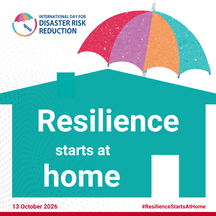
Preparations are underway for the International Day for Disaster Risk Reduction (IDDRR) 2026, which will be observed on 13 October under the theme “ Resilience Starts at Home ." This year's campaign highlights how decisions related to housing, land use, construction and urban planning shape disaster risk, and calls on governments, local authorities, the private sector and households to work together to ensure homes are places of safety and resilience. Social media assets for the campaign are available to download. https://iddrr.undrr.org/
To mark the occasion, UNDRR, supported by Switzerland, is organizing a series of events (13-15 October) in Geneva, the world’s Prevention Hub, which showcase practical solutions for reducing disaster risk and preventing disasters.
Registration for the following events is currently open:
- Geneva Youth Festival – International Day for Disaster Risk Reduction
13 October
An interactive festival engaging young people in disaster preparedness, household resilience and everyday actions that help keep families and communities safe. - From knowledge to action: Communication for a safer world
14 October – Online and in person
This event will highlight practical approaches for strengthening risk communication as part of disaster preparedness and risk governance. - When home is lost: From prevention to durable solutions for disaster displacement
14 October
A roundtable exploring how disaster risk reduction can help prevent displacement and support durable solutions when displacement occurs. - Resilient housing in a changing risk landscape
14 October
Experts will discuss how housing affordability, availability and changing risk landscapes shape vulnerability in cities, and how resilient housing contributes to broader urban resilience. - Facing extreme heat in Europe: Reviewing summer 2026 – Preparing for summer 2027
15 October
A platform for sharing lessons, comparing what is working, identifying gaps, and exploring how successful local approaches can be scaled nationally and regionally.
From Havana to Port-au-Prince: strengthening resilience across Latin America and the Caribbean

In September, SRSG Kamal Kishore travelled to Cuba, Colombia and Haiti to engage with governments, partners and communities on how to strengthen disaster resilience in a region facing growing climate and disaster risks.
In his mission to Cuba, SRSG Kishore saw how the country is strengthening the links between national disaster risk management institutions and local communities to translate forecasts and early warnings into decisions and early actions at every level, particularly within communities.
In Haiti, which faces persistent humanitarian and security crises, SRSG Kishore noted the country’s progress under the Early Warnings for All initiative, as demonstrated by Hurricane Melissa, and highlighted the value of investing in anticipatory action to protect communities, schools, hospitals and livelihoods
Sendai Framework data reveals progress and unfinished business
New officially reported data by national governments through the Sendai Framework Monitor show that countries have made significant progress in reducing disaster mortality, strengthening disaster risk reduction strategies and expanding multi-hazard early warning systems. Yet the data also reveal persistent challenges: the rate of people affected by disasters has doubled, reported direct economic losses exceeded US$1 trillion over the past decade, and damage to critical infrastructure and disruption of essential services remain substantial.
Africa calls for sustained momentum on early warning systems
Governments, regional institutions and international partners gathered on 2–4 September in Addis Ababa, Ethiopia, for the Africa Early Warnings Forum 2026. While significant progress has been made in expanding early warning coverage across the continent, participants emphasized the need for sustained investment, stronger last-mile communication and long-term financing to close remaining gaps. The Forum concluded with the Addis Ababa Call to Action, reaffirming a shared commitment to ensuring that every person in Africa is protected by effective multi-hazard early warning systems.
Counting the value of flood prevention in Côte d'Ivoire
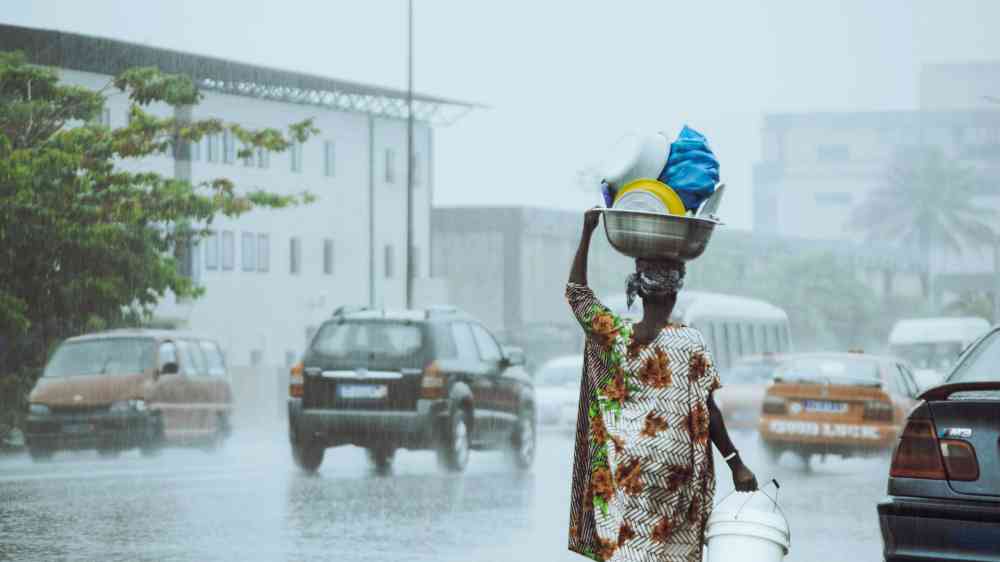
UNDRR worked with the Government of Côte d'Ivoire to develop a national flood-risk profile that quantifies risk, compares protection options and demonstrates the economic returns of prevention. This profile is accessible via an interactive online platform as a practical tool for government institutions, planners and investors to prioritize measures that reduce future losses and protect development gains. In one scenario, it found that investments in flood defences would pay for themselves in 9 to 11 years.
New guidance note on harmful information in disasters
UNDRR’s new guidance note, Harmful information in disasters: Risk communication for safer decisions, offers practical guidance for authorities, communicators and disaster risk management practitioners on strengthening the information environment before, during and after crises – from communicating under pressure and monitoring harmful narratives to deciding when to respond, coordinating action and learning from experience.
Explore the updated Risk Communication Hub
Explore UNDRR’s updated Risk Communication Hub on PreventionWeb. The platform brings together guidance, research, tools and practical examples to support more effective risk communication. The hub includes resources on audience research, developing risk communication strategies, understanding risk perception and behaviour, strengthening trust and information integrity, and designing inclusive communication.
Syria advances towards a national multi-hazard early warning system
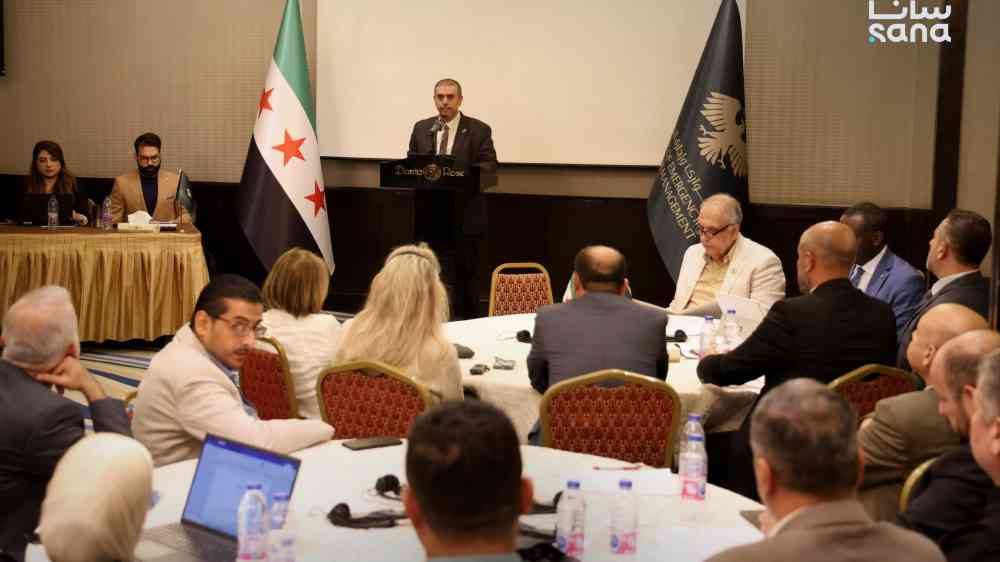
Syria took another step towards strengthening disaster preparedness through a national workshop on multi-hazard early warning systems . Organized by the Ministry of Emergency and Disaster Management in partnership with UNDRR, the workshop brought together government institutions, UN agencies and disaster risk reduction partners to assess existing capacities, identify priority gaps and define the way forward. The workshop will inform a four-year national roadmap for multi-hazard early warning, complemented by a set of priority actions for the next six months.
UNDRR and Google team up to offer AI Masterclass
In September, UNDRR and Google delivered a three-part masterclass on “AI for Multi-Hazard Early Warning Systems.” The sessions, which were recorded and are available online , were designed to explain how AI and machine learning can support forecasting and risk analysis, equip participants with skills and tools to use within their early warning programmes, and showcase real-world examples. The series attracted 2,416 participants from 163 countries and territories, highlighting the strong global interest in harnessing AI to strengthen Early Warnings for All.
Japan launches the road to APMCDRR 2027
Japan has announced that Sendai City will host the Asia-Pacific Ministerial Conference on Disaster Risk Reduction (APMCDRR) 2027 from 25 to 29 October 2027. The conference returns to the city where the Sendai Framework was adopted in 2015, carrying both symbolic and strategic significance as countries enter the final years of implementing the framework. A regional consultation process has already begun to help shape its agenda and ensure it reflects the priorities and perspectives of governments and stakeholders across Asia and the Pacific.
Take part in the EW4All global consultation survey
The Early Warnings for All (EW4All) Pillar Leads – UNDRR, WMO, ITU and IFRC – invite feedback on the initiative’s impact to date, remaining gaps in early warning systems, and priorities for future global cooperation. The survey is part of a regional-to-global consultation bringing together governments, regional bodies, practitioners and communities, and will help inform a shared understanding of what has worked and how global early warning cooperation should evolve beyond 2027.