
Ukrainian practitioners complete MCR2030 Training of Trainers in the Republic of Korea
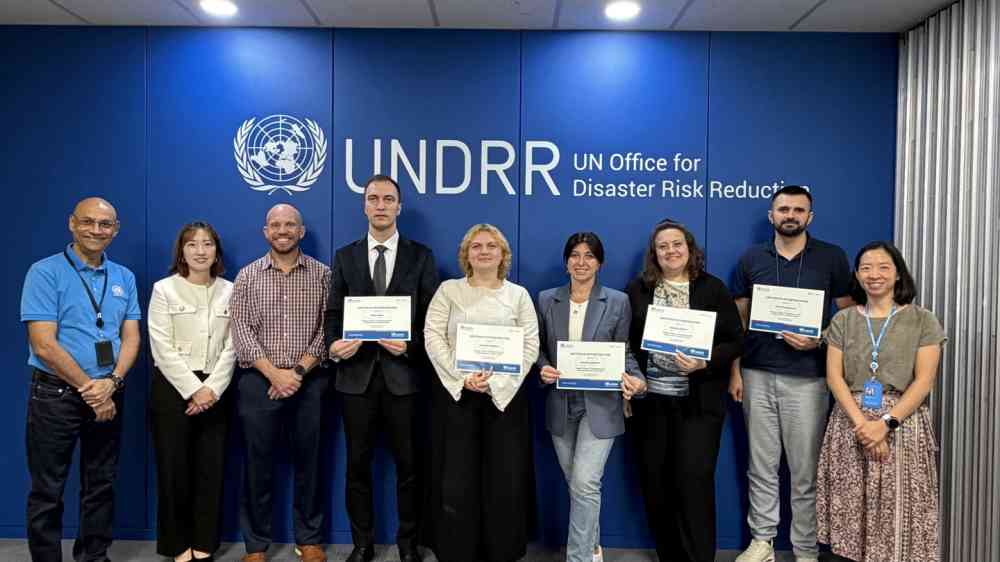
Incheon, Republic of Korea, 14 September 2026 — Six Ukrainian representatives and urban practitioners completed a two-day Training of Trainers on the Disaster Resilience Scorecard for Cities, held on 10–11 September at the UNDRR Global Education and Training Institute (GETI) in Incheon, Republic of Korea. The training deepened UNDRR's ongoing engagement with Ukrainian cities and regions through the Making Cities Resilient 2030 (MCR2030) Initiative, strengthening local capacity to apply risk-informed approaches to urban resilience.
The Ukrainian delegation included representatives from the Lviv City Institute (an MCR2030 Resilience Hub), the Center for Disease Control of Lviv Region under the Ministry of Health, UNBROKEN Ukraine, the city of Zaporizhzhia, the Khmelnytskyi Regional State Administration, and a national DRR expert from Kyiv. Training alongside practitioners from India and Bangladesh, participants had the chance to compare approaches, test ideas against different institutional realities, and exchange lessons on applying resilience tools in varied risk environments.
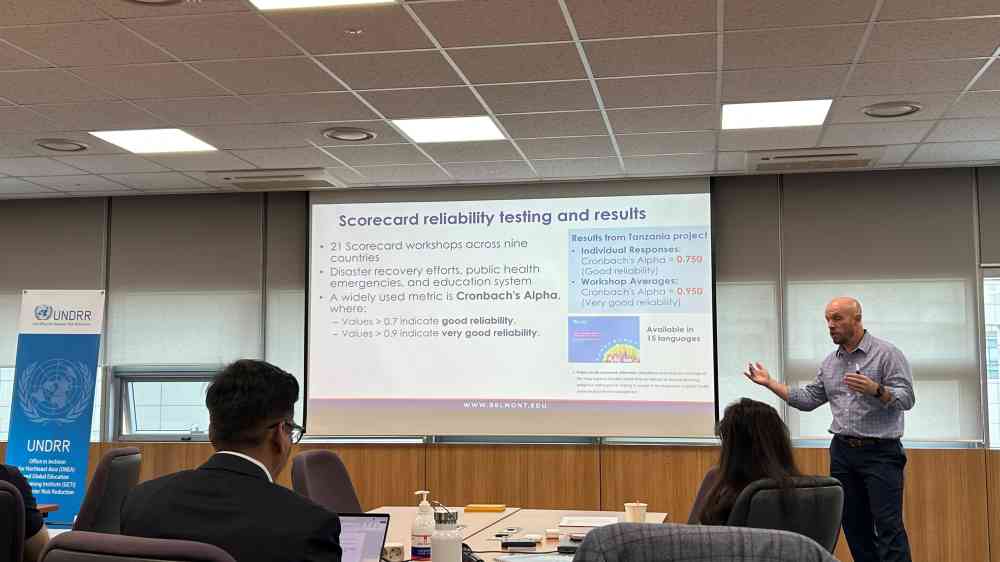
Prof. Benjamin Ryan from Belmont University is explaining the public health scorecard.
The training focused on the application of the Disaster Resilience Scorecard for Cities, with particular attention to the Preliminary Scorecard and thematic applications related to public health systems and persons with disabilities. Participants developed practical skills to facilitate Scorecard processes, identify and prioritize resilience actions, and support local governments in strengthening disaster risk reduction and resilience planning. The Scorecard is structured around UNDRR's Ten Essentials for Making Cities Resilient and supports cities in assessing progress and identifying areas for action.
For the Ukrainian participants, the training was also a space to identify practical next steps for advancing disability-inclusive and health-sensitive disaster risk reduction — work directly relevant to recovery and resilience planning in a challenging risk environment. The session took place during a broader week of exchange in Incheon, which also included the International Disaster Resilience Leaders Forum (7–8 September) and a dedicated training session on designing fundable climate adaptation projects, co-organized with ICLEI (9 September), giving the delegation further opportunities to connect with cities and practitioners from other regions.
"Training local leaders to apply practical resilience tools is an important part of turning global commitments into local action," said Yigyeong Oh, DRR & Resilience Implementation Expert from UNDRR Regional Office for Europe and Central Asia (ROECA). She underscored that, "Through MCR2030, UNDRR will continue supporting Ukrainian cities and regions to strengthen locally led disaster risk reduction, connect with peers globally and build partnerships that respond to their evolving needs."

"The training provided practical tools for assessing urban resilience and identifying key gaps and priorities. The Disaster Resilience Scorecard is especially useful for developing concrete actions, assigning responsible institutions, and improving coordination between different stakeholders." — Viktoriia Agientaieva, Director of the City Development Institute, Zaporizhzhia City Council, Ukraine.
"My biggest takeaways were the importance of cross-sectoral coordination, practical risk assessment, and integrating disaster risk reduction into long-term urban planning. I also gained a better understanding of how cities can protect critical infrastructure, ensure the continuity of essential services, and apply the 'Build Back Better' principle during recovery and reconstruction. These approaches are particularly relevant to strengthening the resilience of healthcare systems and Ukrainian cities." — Mariana Svirchuk, Executive Director, UNBROKEN Ukraine.
“The training in Incheon made the MCR2030 approach and the Disaster Resilience Scorecard methodology practical and directly applicable to our region. In Khmelnytskyi, as in the whole Ukraine, resilience is not an abstract concept—it is the ability of a region and its communities to continue functioning during war and crisis. A strike on energy infrastructure can rapidly disrupt water supply, communications, hospitals, transport and businesses, while population displacement places additional pressure on housing and essential services. The Scorecard provides regional and local authorities with a structured way to identify these interconnected risks, assess preparedness and vulnerabilities, and translate the findings into measurable priorities, coordinated actions and concrete resilience projects. This understanding is essential for effective regional development, recovery planning and a stronger dialogue with international partners.” — Roman Uzhva, Deputy Head, Khmelnytskyi Regional Military Administration, Ukraine.

The training also strengthened connections with the German Corporation for International Cooperation (GIZ) and the Korea International Cooperation Agency (KOICA), opening further opportunities for collaboration on capacity development and inclusive resilience in Ukraine.
For UNDRR ROECA, the training reflects a continued, practical commitment to Ukrainian cities and regions: equipping local practitioners with tools they can apply immediately, while connecting them to a wider MCR2030 network of peers navigating their own resilience challenges. UNDRR ROECA will continue working with Ukrainian cities and regions through MCR2030 — supporting the application of resilience tools, strengthening peer-to-peer learning, and linking local practitioners with international partners. The Training of Trainers is expected to provide a foundation for participants to share what they've learned with their own institutions and communities, extending its impact well beyond the two days in Incheon.
About MCR2030
Making Cities Resilient 2030 (MCR2030) is a United Nations-led global initiative supporting local governments and communities to strengthen disaster resilience through advocacy, knowledge exchange, and practical tools. UNDRR serves as the Secretariat of MCR2030.