
Timor-Leste charts a path towards its first national disaster risk reduction strategy
In Timor-Leste, a single heavy downpour can wash out a mountain road, cutting farmers off from markets, children from schools and clinics from supplies. Floods, landslides, droughts, earthquakes, strong winds and coastal hazards all threaten the country's hard-won development gains, while climate change is intensifying many of these risks.
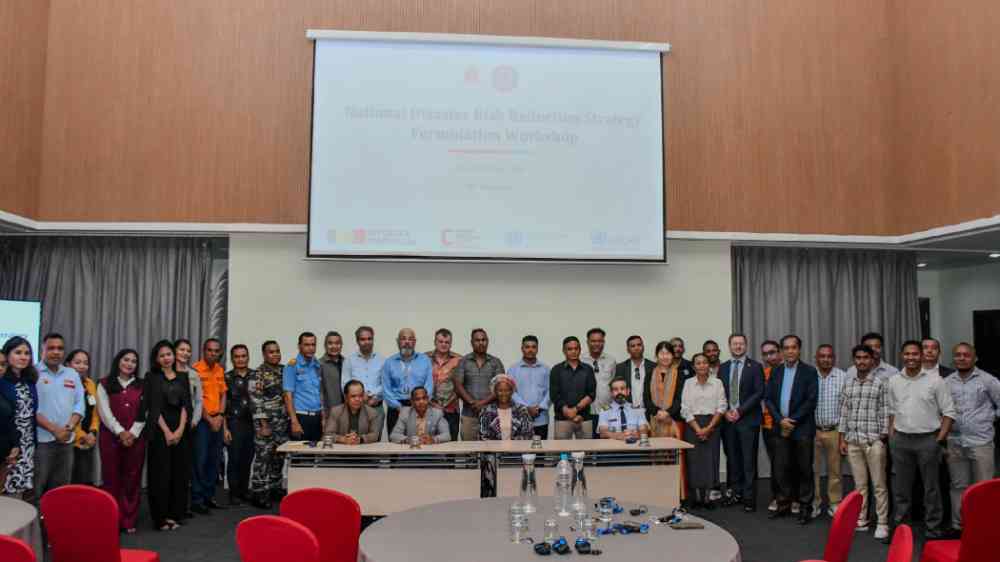
From 20 to 22 October 2026, around 60 representatives from government institutions, civil society organizations, development partners, academia and the United Nations came together in the capital Dili to help shape Timor-Leste's first national disaster risk reduction (DRR) strategy. Convened by the Civil Protection Authority (CPA) with support from the United Nations Office for Disaster Risk Reduction (UNDRR) and funding from the Government of Portugal through Camões, I.P., the consultation marked a milestone toward building a safer and more resilient future for the country.

From a training room to a national conversation
The workshop built on momentum generated in September 2025, when government officials gathered for a three-day training on disaster risk reduction and disaster risk governance (read the story). Since then, the process has evolved into a broad national effort bringing together stakeholders from across sectors and levels of society.
This year's consultation brought together CPA officials, line ministries, nine United Nations agencies, development partners including the Asian Development Bank (ADB), Asian Disaster Preparedness Center (ADPC) and Regional Integrated Multi-Hazard Early Warning System (RIMES), diplomatic missions, and civil society organizations such as PERMATIL, Oxfam and Catholic Relief Services. The final day was dedicated to non-government stakeholders, ensuring that communities, technical organizations and development partners could contribute directly to shaping the national strategy.
Opening the workshop, Secretary of State for Civil Protection, H.E. Domingos Mariano Reis, emphasized that disaster risk reduction must be everyone's responsibility and integrated across all sectors of government.
"The ultimate goal is not only to respond better to disasters, but to build a Timor-Leste that is better prepared, safer, and more resilient before disasters occur", Secretary of State Domingos Reis said.

Secretary of State for Civil Protection Domingos Reis
H.E. Duarte Alves, Ambassador of Portugal, reflected on Portugal's own experience with coastal erosion, wildfires and extreme weather events, underscoring the importance of investing in prevention and preparedness.
"We cannot prevent an earthquake. We cannot prevent a tsunami. Therefore, the only solution within our reach is prevention and proactive action to protect populations", Ambassador Alves said.
UN Resident Coordinator Ms. Funmi Balogun-Alexander highlighted the importance of shifting from reactive disaster response toward risk-informed development and resilience.
"Prevention is not only about avoiding disasters. It is about protecting development, protecting investment, and above all, protecting people", Ms. Balogun-Alexander said.
Seeing risk as a development issue
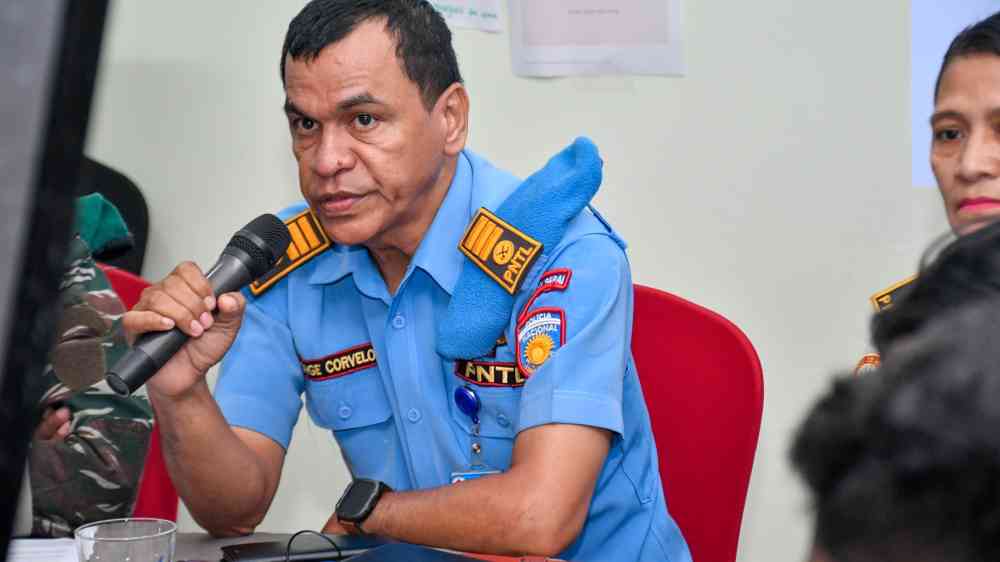
Over three days, participants examined Timor-Leste's disaster and climate risk landscape through technical presentations, group discussions and experience-sharing.
A clear message emerged: disaster risk is not only a humanitarian concern. It is also a development challenge that affects livelihoods, public services, infrastructure, economic growth and the country's long-term development ambitions.
Participants identified a range of underlying drivers that increase vulnerability, including environmental degradation, fragmented risk information, inadequate infrastructure standards and unequal access to essential services. Discussions also highlighted the importance of ensuring that women, persons with disabilities, children and other groups that may be at greater risk are fully considered in disaster risk reduction policies and programmes and can contribute to them.
A shared vision, seven priorities
An important outcome of the workshop was a shared vision for a resilient Timor-Leste. Participants agreed that resilience goes beyond emergency response. It involves the ability of institutions, communities, ecosystems and the economy to anticipate, withstand, adapt to and recover from shocks and stresses. There was also strong consensus that disaster risk reduction and climate resilience should be pursued together through integrated planning and investment. The discussions converged around seven strategic priorities that will guide the further development of the National DRR Strategy:
- Better risk information. Strengthening disaster risk assessments, loss and damage databases, and data-sharing arrangements to support evidence-based decision-making.
- Early warnings that reach everyone. Expanding multi-hazard early warning systems while ensuring communities receive and can act on risk information.
- Stronger governance and coordination. Clarifying institutional roles and responsibilities and strengthening coordination across sectors and levels of government.
- Investing in prevention. Integrating disaster risk reduction into development planning, budgeting and public investment decisions.
- Empowering municipalities and communities. Building local capacities and strengthening disaster risk management at municipal and community levels.
- Climate resilience and inclusion. Ensuring disaster risk reduction and climate adaptation efforts reinforce one another while prioritizing the needs of vulnerable populations.
- Preparedness, recovery and building back better. Strengthening preparedness and recovery systems so that reconstruction after disasters reduces future risk rather than recreating it.
Together, these priorities provide a foundation for a comprehensive future strategy that supports risk-informed development and sustainable resilience.

From consultation to action
The consultation generated valuable technical inputs and broad stakeholder consensus that will inform the first draft of Timor-Leste's National DRR Strategy.
The drafting team, led by CPA and supported by UNDRR is now consolidating findings from the workshop and conducting additional consultations with key institutions that were unable to participate, including ministries responsible for finance, planning, education, social solidarity, agriculture, state administration, and tourism and environment, as well as the National Statistics Institute.
Following these consultations, the draft strategy will be circulated for stakeholder feedback before undergoing technical review and validation. Once finalized, it will be submitted for government consideration and endorsement.
Partnership for a more resilient future
The consultation was made possible through the leadership of the Civil Protection Authority and the support of the Government of Portugal through Camões, I.P., in partnership with UNDRR, the UN Resident Coordinator's Office, UN Women and stakeholders from across government, civil society, development organizations and the United Nations system.
What began as a technical process to develop a national strategy has become a broader national conversation on resilience. By bringing together government institutions, civil society organizations, development partners and the United Nations, the consultation helped build a shared vision for a safer and more resilient Timor-Leste.
As the strategy moves toward finalization in 2027, the strong engagement and consensus demonstrated during the workshop reflect a growing national commitment to understanding risk, investing in prevention and ensuring that communities are better prepared for the challenges of tomorrow.