
Resilience starts with you: World Tsunami Awareness Day marked at UN Headquarters
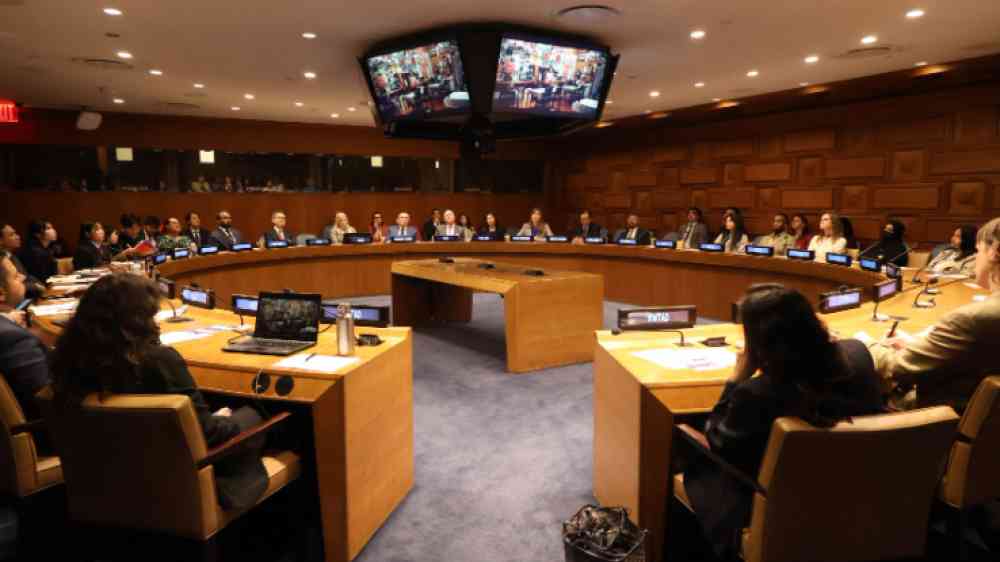
Governments, experts, community representatives, young people and partners gathered at the United Nations Headquarters in New York to commemorate World Tsunami Awareness Day 2026 under the theme "Be Tsunami Ready: Resilience Starts with You."
The event was convened by the United Nations Office for Disaster Risk Reduction (UNDRR) and the Permanent Mission of Japan, together with the Permanent Missions of Chile, the Maldives, Sri Lanka and Thailand, with the support of the Group of Friends for Disaster Risk Reduction, co-chaired by Australia, Indonesia, Norway and Peru, as well as the United Nations Educational, Scientific and Cultural Organization (UNESCO) and the United Nations Institute for Training and Research (UNITAR).
Opening and moderating the event, UNDRR Director Paula Albrito underscored the importance of individual and community engagement in building resilience. She emphasized that preparedness is an ongoing process that requires continuous commitment and action.
Addressing the gathering, ECOSOC President Ammar Bendjama highlighted the close relationship between disaster risk reduction and sustainable development. Disasters, he noted, can erase years of hard-won progress in a matter of minutes, reinforcing the need for sustained investment in preparedness and resilience. "We cannot prevent tsunamis, but we can prevent them from becoming human tragedies," he said.
The event featured a recorded video message from H.E. Mr. Toshimitsu Motegi, Minister for Foreign Affairs of Japan, whose country led the initiative that established World Tsunami Awareness Day through a United Nations General Assembly resolution in 2015. The discussion also recognized Japan's experience in disaster risk reduction and longstanding contribution to advancing tsunami awareness and preparedness.
The power of stories in building preparedness
A central feature of the event was the screening of Tsunami Ladies, a documentary that follows women survivors from Chile and Japan who played leading roles in rebuilding their communities after devastating tsunamis. Introducing the film, producer Emiliano Rodríguez Nuesch reflected on the role of storytelling in disaster risk reduction, he quotes: "Stories can inspire people and engage them in preparedness action," he said, emphasizing their ability to connect people across cultures and keep disaster awareness alive. The film illustrated how recovery is shaped not only by reconstruction efforts, but also by local leadership, and the social bonds that help communities move forward.
Building resilience through communities
A panel discussion brought together representatives from government, academia, local communities and the private sector to explore how preparedness can be strengthened before disaster strikes. Drawing on Chile's experience following the 2010 earthquake and tsunami, Ambassador Roberto Ampuero Espinoza emphasized the importance of reconstruction that reduces future risk while supporting economic recovery and strengthening institutions. Representing Thailand, Deputy Permanent Representative and Ambassador Xuto Pawaree Chaipatiyut highlighted the contributions of women in supporting recovery after the 2004 Indian Ocean tsunami and described how volunteerism, community initiatives and education have helped preserve disaster memory across generations.
From Samoa, Ms. Molly Nielsen, Chairperson of the National Tsunami Ready Board, stressed that preparedness cannot be measured solely by plans or infrastructure. Drawing on lessons from the 2009 tsunami, she emphasized the importance of local leadership, traditional governance systems, families, women's groups and indigenous knowledge in ensuring that people understand risks and know how to respond.
The discussion also featured perspectives from Ms. Chloe Demrovsky of New York University and Professor Toshiya Hoshino of Osaka University, who underscored the importance of trust, social capital and business continuity in supporting long-term recovery.
Youth carrying preparedness into the future
A highlight of the event was the participation of students from Iwate Prefecture, Japan, who led the 2026 High School Student Summit on World Tsunami Awareness Day from 20 to 22 October. Representing young people from 14 countries, the students presented the "Pass to the World: Iwate Hope Declaration," committing to advance inclusive disaster risk reduction, strengthen preparedness and preserve lessons from past disasters. Their declaration called for greater accessibility of information, stronger disaster education and wider community participation, while demonstrating the important role young people play in shaping a more resilient future.
A shared responsibility
Participants reflected on the contribution of culture, storytelling, youth leadership and community engagement to resilience building and informing future disaster risk reduction efforts. Closing remarks from representatives of Sri Lanka and the Maldives echoed many of the themes raised throughout the event. Drawing on their countries' experiences following the 2004 Indian Ocean tsunami, both highlighted the value of public awareness and community-based preparedness in helping save lives. Across all interventions, a common message emerged: while tsunamis cannot be prevented, their impacts can be significantly reduced when people understand risk, trust warnings, support one another and act early. As participants concluded, building a tsunami-ready future is a shared responsibility, one that begins with individuals, families and communities, and extends across governments, institutions and generations.