
Mozambique learns from Japan’s expertise in disaster risk reduction
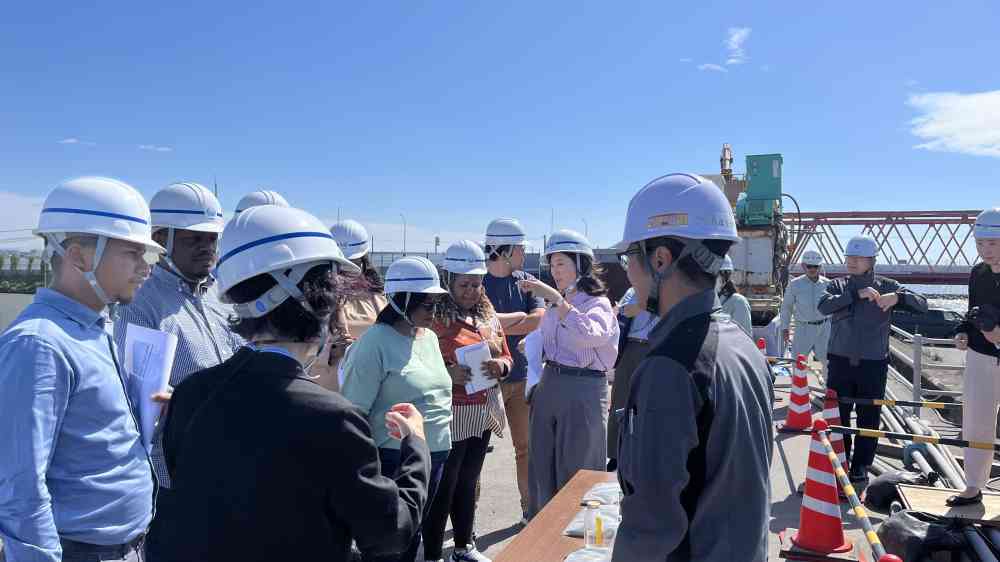
Storm Surge Protection Embankment Seismic Reinforcement Site in Kisosaki town, Mie Prefecture
How can countries invest today to reduce disaster losses tomorrow? A delegation from Mozambique explored this question during a study tour and workshop in Japan, learning how centuries of experience, strategic investment and technological innovation can help reduce disaster risks and strengthen resilience.
Mozambique faces recurring cyclones, floods, droughts and storm surges that continue to threaten lives, livelihoods and critical infrastructure. As the country works to strengthen its disaster risk reduction mechanisms, representatives led by the National Institute for Disaster Management and Risk Reduction (INGD), supported by Ministry of Finance and Eduardo Mondlane University embarked on a study tour to Nagoya, Japan.
The study tour took place from 5 to 9 October 2026. Organized by the United Nations Office for Disaster Risk Reduction (UNDRR) in collaboration with Tohoku University and funded by the Government of Japan, which is part of the project Strengthening Readiness for Resilient Recovery and Build Back Better in Mozambique.
The study tour included visits to flood-prone communities in Kaizu, Gifu Prefecture, where participants explored both historical and modern approaches to flood risk management. At Inuyama Castle and the Waju Pumping Station, delegates learned how centuries of local knowledge, combined with substantial investment in flood protection infrastructure, have helped communities live with recurring flood hazards.
Participants also visited the Storm Surge Protection Embankment Seismic Reinforcement Site in Kisosaki town, Mie Prefecture. The reinforcement site enables countermeasures for earthquake and tsunami risks, further demonstrating the value of continuous improvement of existing DRR measures.
Additionally, participants learned about other measures to improve storm surge protections at Nagoya Port. Between 2013 and 2016, the Nagoya Port and Airport Office completed an improvement project to strengthen the port’s sea wall. The seawall was equipped with two lines of protection. These pre-emptive improvements have enabled better protection in anticipation of future earthquakes and tsunamis.
“We designed a program focusing on the evolution of Japan’s disaster risk reduction capabilities — from before the country's modernization, through the modernization process itself, and particularly on how our predecessors engaged in trial and error following large-scale disasters. The participants were highly motivated, and the question-and-answer sessions were lively. The program proved to be a meaningful experience for all involved."
- Professor Yuichi Ono, Tohoku University
A key message throughout the study tour was that engineering solutions alone cannot eliminate disaster risk. Japan's experience showed the value of combining structural measures, such as drainage systems and coastal defences, with non-structural measures like land-use planning, early warning systems, evacuation planning and public awareness programmes. A large contributing factor also proved to be coordination between governing bodies. Public authorities, port operators and private-sector partners worked together to support preparedness, protect investments and ensure business continuity during disasters was also highlighted.
Akio Tomita, Deputy Director-General of the Ports and Airports Department, for the Ministry of Land, Infrastructure, Transport and Tourism shared three key messages for the delegation: “Plan for risks before disasters happen, combine hard and soft measures, and build partnerships before a crisis.”
Private-sector companies Weathernews Inc. and Gaia Vision demonstrated how weather forecasting, flood modelling and risk assessment tools can help decision-makers better understand hazard exposure and potential impacts. These tools can support investment planning by identifying vulnerable populations, critical infrastructure and economic assets at risk. Combined with local data and cost-benefit analysis, such information can help governments prioritize investments that deliver long-term social and economic benefits.
By combining historical knowledge, risk-informed investments, technological innovation and multi-stakeholder partnerships, Japan demonstrates how sustained investment in resilience can reduce disaster losses and support long-term development.
As Mozambique continues to advance efforts to build back better and strengthen readiness for future disasters, the exchange highlighted the value of international cooperation and peer learning in accelerating progress towards a more resilient future.
"The study tour to Japan provided a deeper understanding of the importance of an integrated and sustainable approach to disaster risk reduction. Going forward, Mozambique's goal is to adapt these lessons to our own national context rather than directly replicating the Japanese model. It will be essential to strengthen coordination among key disaster risk reduction institutions, alongside the finance sector and other relevant stakeholders, with the goal of creating an integrated information base covering risks, losses and damages, exposure, and vulnerability."
- Rita Almeida, Director of Planning and Cooperation, INGD, Mozambique