
From Risk Knowledge to Community Action: Building Inclusive Resilience in Irbid, Jordan
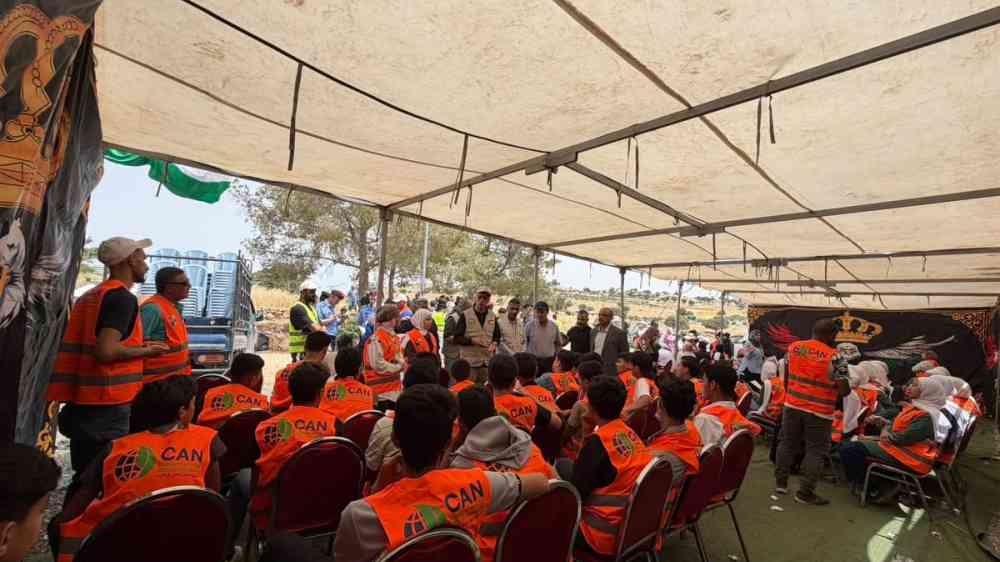
Community-led action in Irbid is demonstrating how locally grounded risk assessment and resilience planning can translate into sustained preparedness and climate resilience, particularly for communities facing multiple and overlapping vulnerabilities.
In northern Jordan, the Governorate of Irbid faces interconnected climate, health and disaster risks. Increasing temperatures, water scarcity, extreme weather and other climate-related hazards place additional pressure on communities and public services. The presence of refugees and other vulnerable groups further reinforces the importance of ensuring that resilience planning is inclusive and responsive to different needs.
Against this backdrop, the United Nations Office for Disaster Risk Reduction (UNDRR), together with the International Organization for Migration (IOM) and the World Health Organization (WHO), supported Jordan through the joint UN programme “Harnessing Synergies between Climate Change Adaptation and Risk Reduction in Migrant-Inclusive Health System Responses.”
The programme strengthened connections between disaster risk reduction, climate adaptation, health and human mobility, while supporting national and local institutions to better understand risks and translate that knowledge into preparedness and resilience action.
Understanding risk together
A key element of the work in Irbid was the application of the Strategic Tool for Assessing Risks (STAR), bringing together government institutions, health authorities and disaster management actors to jointly examine climate-related health risks and preparedness.
Rather than addressing climate, health and disaster risks separately, the process enabled stakeholders to develop a shared understanding of risks, vulnerabilities and preparedness priorities. The programme’s external evaluation identified the STAR assessments undertaken in Irbid among its most visible achievements in Jordan, particularly in relation to structured risk identification and institutional learning.
The process also strengthened cross-sector dialogue and communication among institutions involved in climate, health and disaster risk management. But in Irbid, the process did not end with risk assessment and planning.
From planning to community-led action
Building on the risk knowledge, priorities and partnerships generated through the programme, the Community Action Association Network (CAN) continued working at the local level to translate identified resilience priorities into practical community-led initiatives.
Through CAN’s Al-Munther Al-Monakhi Initiative, the “A Safe Summer for Our Forests” campaign at the Kufrabil Reforestation Project in Koura District engaged local communities in wildfire-prevention measures, climate-risk awareness and the protection of forest and vegetation cover.
The initiative directly advanced priorities identified through Irbid’s earlier Local Resilience Action Plan process, particularly those related to wildfire risk reduction, protection of natural ecosystems and stronger community preparedness and participation in addressing climate-related environmental and public-health risks.
The experience demonstrates the value of enabling local organizations and communities to act not simply as beneficiaries of resilience programmes, but as partners capable of carrying locally identified priorities forward.
Putting vulnerable communities at the centre
Inclusion was central to the Irbid approach, recognizing that climate and disaster impacts are not experienced equally and that preparedness measures need to respond to the circumstances of refugees, host communities and other groups facing heightened vulnerability.
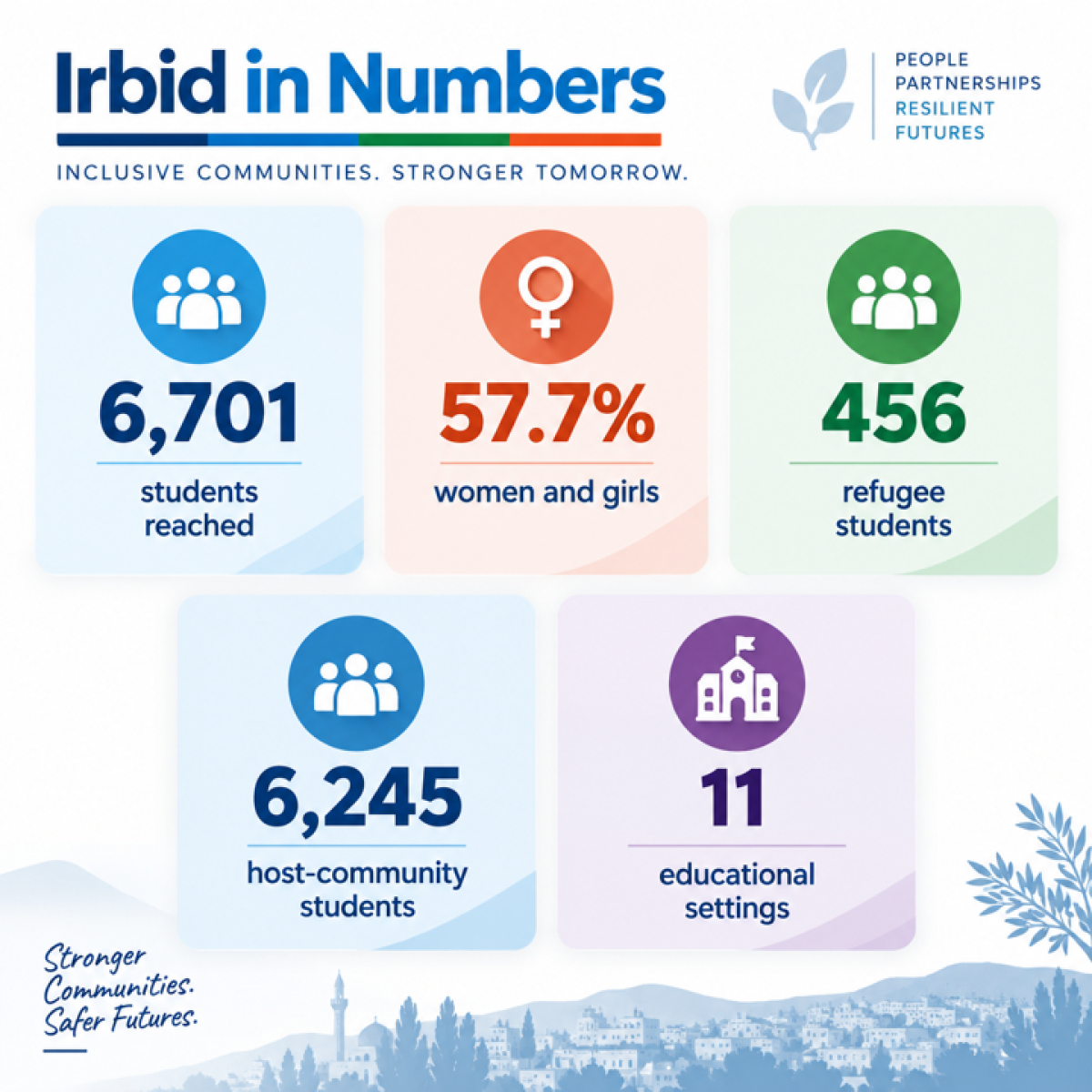
School-based activities in Hawara reached 6,701 students across 11 educational settings, including both refugee and host-community students. Women and girls accounted for 3,868 participants, or 57.7 per cent, exceeding the minimum target of 40 per cent female participation. A total of 456 refugee students and 6,245 host-community students participated.
Activities covering disaster risk reduction (DRR), Nature-based Solutions (NbS) and Early Warning Systems (EWS) were adapted to different student age groups. Bringing refugee and host-community students into the same preparedness activities helped expand access to climate and disaster risk information while supporting shared community resilience.
From awareness to preparedness: what changed?
The activities moved beyond awareness-raising to strengthen practical preparedness. Participants developed greater understanding of climate-related risks, DRR, Nature-based Solutions and Early Warning Systems, including how to identify risks, interpret early warning messages and take timely preventive measures.
The activities also supported wider sharing of risk information among students, young people, families, civil society organizations and community representatives, helping strengthen preparedness at the community level.
One local community representative described how this changed his understanding of disaster risk reduction:
“I learned that Disaster Risk Reduction is not only about responding to disasters after they occur, but also about preparing for them and reducing risks in advance. I also gained a better understanding of the importance of Early Warning Systems and how early information and warnings can help us act more quickly and protect ourselves and our community.”
— Bahader Al-Dhahir, local community representative, Irbid
Sustaining resilience beyond the programme
One of the most significant lessons from Irbid is the importance of continuity and local ownership.
The programme’s external evaluation identified comparatively strong prospects for institutional sustainability in Jordan, with programme outputs continuing to inform planning beyond the initial intervention. CAN’s continued engagement adds a community dimension to this sustainability, with local actors carrying forward knowledge and priorities generated through the resilience process.
Building on those foundations, CAN has continued to mobilize partnerships and implementation opportunities in Irbid. This has helped the resilience process evolve beyond a time-bound intervention towards continued community engagement, preparedness and locally led climate action.
“For us, the value of the UNDRR-supported resilience process did not end with the completion of the project. It provided a strong evidence base and locally identified priorities that CAN has continued to translate into community action, while building new partnerships and mobilizing opportunities for implementation. This is how we see sustainability: turning risk knowledge and planning into continued, locally owned action that delivers tangible resilience outcomes.”
— Eng. Doa’a Al-Derabani, CEO, Community Action Association Network (CAN)
A pathway that can be replicated
The Irbid experience offers lessons beyond one governorate. It demonstrates a practical pathway for locally led resilience:
Understand the risk → identify priorities together → strengthen local planning → empower community actors → implement locally led solutions → measure change → scale what works.
For UNDRR and its partners, the experience reinforces the importance of connecting risk knowledge and institutional planning with the local organizations and communities that ultimately translate resilience priorities into action.
As climate and disaster risks intensify across the Arab region, the experience in Irbid illustrates how locally owned, inclusive and sustained action can bridge the gap between resilience planning and tangible improvements in community preparedness.