
From governance reform to early action: expanding early warning systems in the DRC

The Democratic Republic of Congo (DRC) faces multiple hazards, including floods, landslides, droughts, storms, epidemics, volcanic hazards and technological hazards. Climate change only increases the intensity and frequency of these hazards, amplifying their effects on lives, livelihoods, and critical infrastructure. Simultaneously, conflict and displacement in the country keep early warning systems fragmented. The interconnected amplification of these hazards has created urgent pressure for a more coordinated, multi-hazard approach to risk governance and disaster preparedness.
The United Nations Office for Disaster Risk Reduction (UNDRR) has supported the DRC in the operationalization of the country’s DRM Strategy (2025–2030) and DRM Policy (2025–2035). In 2025, the DRC achieved a major milestone in strengthening disaster risk governance thanks to sustained technical guidance from UNDRR in collaboration with the UN Resident Coordinator’s Office. This partnership facilitated a coordinated effort toward the development and adoption of two landmark decrees that anchor disaster risk management in national law and establish a robust institutional architecture for resilience.
Building on this foundational legislation and with the support of UNDRR, the Government brought together stakeholders for a national workshop on the Early Warnings for All (EW4All) initiative from 28 to 29January 2026. The initiative was launched by H.E Judith Suminwa, the Prime Minister of the Democratic Republic of Congo alongside Kamal Kishore, the Special Representative of the United Nations Secretary-General (SRSG) for Disaster Risk Reduction. The workshop marked a continuation of UNDRR’s support to the DRC and a critical step toward ensuring effective and inclusive early warnings for the entire country. Discussions focused on strengthening risk knowledge through improved hazard and vulnerability assessments, enhancing observations and forecasting to provide accurate and timelyinformation, ensuring that warnings are disseminated in formats that reach all stakeholders, and building preparedness and response capacities at national and community levels.
The workshop brought together stakeholders from a wide range of backgrounds, including government agencies, United Nations agencies and organisations, universities and research institutes, civil society organizations, the International Red Cross and Red Crescent Movement, and other development partners.
Stakeholders conducted a gap analysis for early warning planning in DRC. They acknowledged that DRC faces institutional and technical capacity gaps such as limited forecasting capacity, insufficient observation networks, and weak last mile communication systems. In addition, insecurity in eastern DRC continues to exacerbate vulnerability and complicate service delivery.
In response to these challenges, the government of the DRC committed to a clear DRR roadmap for strengthening early warning systems and pledged to achieve nationwide coverage of early warnings with a strong inclusion lens. The government also emphasized that preparedness must take precedence over response, ensuring that communities are equipped to act before hazards escalate into disasters.
At the workshop’s conclusion, UNDRR reaffirmed its commitment to supporting the government of the DRC in strengthening risk governance and pledged continued collaboration with the UN Resident Coordinator’s Office to advance resilience-building efforts. By sustaining technical guidance and fostering varied partnerships, UNDRR will help to ensure that the country’s disaster risk management reforms translate into lasting institutional capacity.
The achievements of the EW4ALL launch build directly upon DRC’s recent achievements with the two landmark decrees. The EW4All workshop then marked a turning point for DRC’s disaster risk management by embedding disaster risk management into national frameworks, and translating governance reforms into practical systems that can save lives, reduce losses, and strengthen resilience. With climate risks rising and vulnerabilities deepening, the combination of a solid legal foundation and a forward-looking early warning roadmap offers a pathway for the DRC to protect its citizens and build safer, more resilient communities.
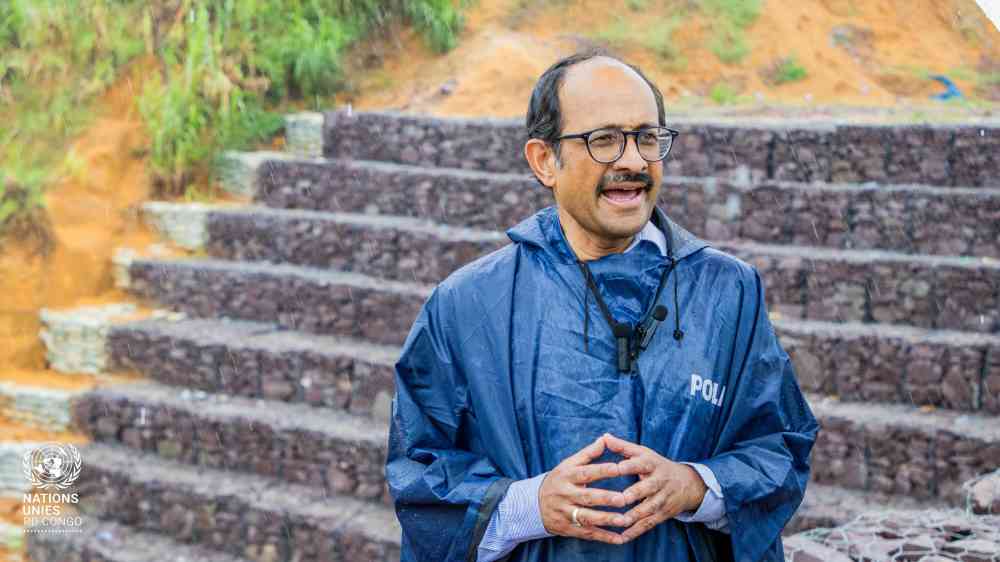
“UNDRR is committed to supporting the implementation of the outcomes of this workshop and to accompanying this process through completion. Indeed, part of the reason I have come to Kinshasa is to coordinate next steps with partners to ensure sustained support for this effort.”
- Kamal Kishore, Special Representative of the United Nations Secretary-General (SRSG) for Disaster Risk Reduction, UNDRR