
Ensuring early warnings and early action reach fragile, and conflict-affected people

Across the African continent, countries face a growing number of hydrometeorological hazards from floods, heat waves, cyclones, and droughts. Least Developed Countries (LDCs), which comprise over 60% of Africa’s 54 countries, are at the sharpest end of this crisis. Just 52% of LDCs worldwide reported the existence of multi-hazard early warning systems in 2025, an increase from 2024, but still considerably low when compared to other developing countries or the global average. Early warning systems face further challenges in conflict and post-conflict situations. For the 14 African LDCs that are in the World Bank’s 2026 list of countries in Fragile and Conflict-affected Situations, these early warning systems are often non-existent, fragmented, or poorly linked to action. This is not from lack of will, but because systems are underfunded, disconnected from humanitarian realities, and are not adapted to contexts of insecurity and displacement.
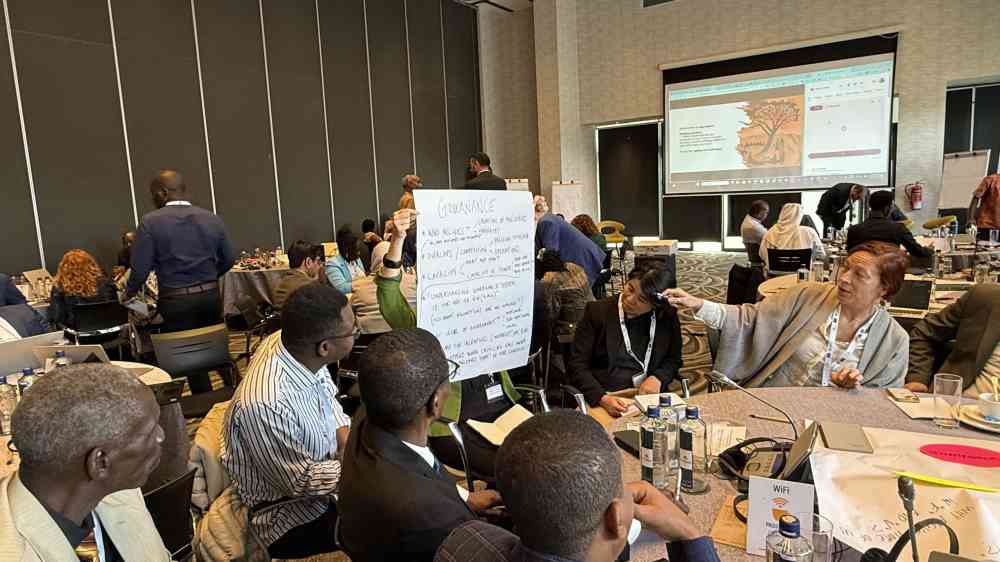
In order to address these additional challenges, national and regional stakeholders were brought together for a three-day workshop focused on finding effective solutions for improving early warnings and early action for LDCs in conflict and post-conflict situations. From 9 to 11 December 2025, stakeholders from nine member states were brought together in Nairobi, Kenya. Participants of the workshop identified actionable steps to design, adapt, and implement multi-hazard early warning systems (MHEWS) in conflict and post-conflict situations, and to ultimately improve the often fragmented and at times non-existent early warning systems available to communities in conflict and post-conflict situations across the African continent.
The workshop was co-organised by the United Nations Office for Disaster Risk Reduction (UNDRR) alongside the United Nations Office of the High Representative for the Least Developed Countries, Landlocked Developing Countries and Small Island Developing States (UN-OHRLLS), the World Meteorological Organization (WMO), the International Telecommunication Union (ITU) and the International Federation of the Red Cross and Red Crescent Societies (IFRC).
The first day of the workshop focused on understanding stakeholder perspectives on conflict and post-conflict situations. The remaining two days were geared towards understanding the best tools and approaches to sustain effective early warning systems (EWS) in these situations, as well as understanding how to overcome common obstacles.
Participants discussed the challenges they have encountered in conflict and post-conflict situations. They brought attention to the weakened state capacity and governance that countries experience during times of conflict and fragility, making it even more difficult for EWS to reach vulnerable populations. Participants also noted the need for greater inclusion in these conflict situations, as social stigmas towards at-risk groups of people, such as those who have been displaced or who are disabled, makes them less likely to be alerted when a hazard is expected or has already been detected.
"We need to overcome the challenges that LDCs are facing, and by implementing the Doha Programme of Action, we should be able to make some headway. Countries that are in conflict and post-conflict situations face additional constraints, and we hope this workshop will help to recognise and address this.”
- Aniket Ghai, Senior Economic Affairs Officer, United Nations Office of the High Representative for Least Developed Countries
After establishing the challenges commonly faced, participants shared some of their success stories in effectively delivering EWS to fragile contexts. Among them was DARAJA Sudan, who shared how they improved the dissemination of essential weather forecasting to at-risk populations in Sudan.
“I also liked the fact that the workshop didn't just end up discussing these challenges. We were also able to hear inspiring stories in terms of what is working ... So then it gave us an opportunity to say, ‘how else can we scale up our efforts to early warning systems in conflict and post-conflict settings?’ So the participants were also able to, apart from looking at the challenges, also brainstorm on what could be practical solutions.”
- Prisca Chisala, Regional Coordinator for Early Warnings and Early Actions in Africa, IFRC
Some key actions agreed upon by participants were the need to build and maintain transboundary and regional data sharing mechanisms, and to harmonise data collection and risk information across borders. They also underscored the need to coordinate cross-border communication and the dissemination of alerts.
The workshop also convened donors including the Climate Risk Early Warning System (CREWS) Initiative, Green Climate Fund, World Bank, European Commission, Italy, and partners who shared practical financing and partnership mechanisms to strengthen and sustain MHEWS drawing on implementation experiences in FCV settings.
Discussions highlighted the importance of aligning early warning investments with country realities, humanitarian operations, and longer-term resilience-building efforts. Participants emphasised the need for flexible approaches that can adapt to evolving conflict dynamics, support coordination across humanitarian and development actors, and ensure continuity of early warning and early action even where institutional capacity and access are constrained.