
Building resilience in Dadaab: Workshop builds capacity of local leaders to tackle urban risks

Dadaab participants having a discussion on disaster resilience.
Dadaab Municipality, Kenya| At the heart of one of the world's largest refugee-hosting areas, Dadaab Municipality is taking bold steps to strengthen disaster resilience and climate adaptation. From 2 to 4 September 2025, a three-day workshop was held at the UNHCR Dadaab Humanitarian Compound, bringing together municipal leaders, the National Disaster Operations Center, the Council of Governors, the county government, refugee service agencies, and civil society to build capacity for disaster risk reduction (DRR) and urban resilience.
Organized under UNDRR's Making Cities Resilient 2030 (MCR2030) initiative and funded by the German Federal Foreign Office, the workshop focused on urban risk-informed development planning. Participants developed a draft local DRR action plan aligned with national disaster and climate frameworks and the Sendai Framework for Disaster Risk Reduction. For the first time, the action plan brings refugee and host communities together for one shared approach to reducing climate risk and building inclusive resilience
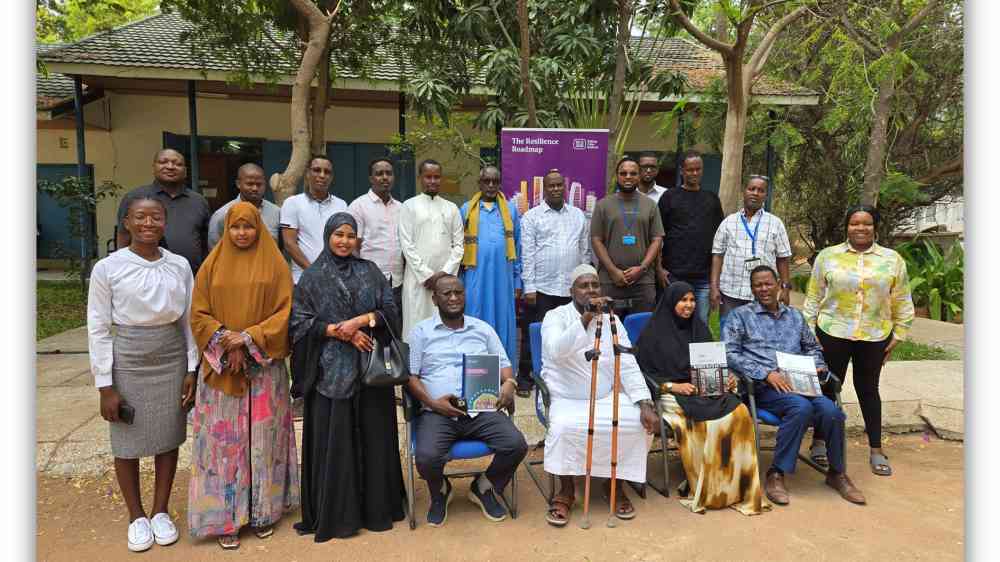
Dadaab participants pose for group photo at the end of workshop.
"This workshop is not just a technical exercise; it's about protecting lives and livelihoods," said Mr. Mohamed Abdi Ali, the Municipality Manager of Dadaab."The strategy and action plan from this workshop will give us a concrete roadmap to reduce risks in Dadaab. It will help us strengthen early warning systems, improve community engagement, and put practical measures in place to reduce the impact of disasters."
Dadaab currently hosts nearly 705,000 residents, including over 430,000 refugees, making DRR particularly critical. Hazards such as fires, floods, droughts and disease outbreaks pose serious threats to both refugees and host communities, many of whom rely on informal livelihoods. The urgency of this work was underscored by the May 2024 floods, which displaced over 20,000 people and disrupted essential services. These events highlighted the fragility of infrastructure and the need for proactive resilience strategies.
"In Dadaab, disaster risk reduction is absolutely essential," the Municipality Manager, Mr Mohamed Abdi Husein emphasized. "Inclusivity is key, making sure that refugee leaders actively participate in decision-making." DRR planning must also include at-risk groups.
"To make DRR inclusive, we need to involve persons with disabilities and their organizations from the start," said Mohamed Abdi Husein, Dadaab Sub-County Disabilities Chairperson. "Early warning information must be accessible, through audio, sign language, or community messengers, and evacuation centers must be physically accessible." National and county-level representatives stressed the need for stronger coordination between local and national DRR efforts.
"While this workshop focuses on Dadaab, it is important to extend the lessons to all six municipalities [of Garissa Country], so we build resilience collectively," said Hon. Zahra Musa, Garissa County Executive Committee (CEC) for Disaster Management.
The Shirika Plan plays a pivotal role in guiding Dadaab's transformation from a humanitarian settlement into a resilient municipality. Its emphasis is inclusive governance, disaster risk reduction, and climate adaptation. By supporting the development of a locally owned DRR action plan and ensuring the participation of refugee leaders, youth, women, and persons with disabilities, implementation of the Shirika Plan can embed risk reduction, resilience and equity into Dadaab's urban planning.
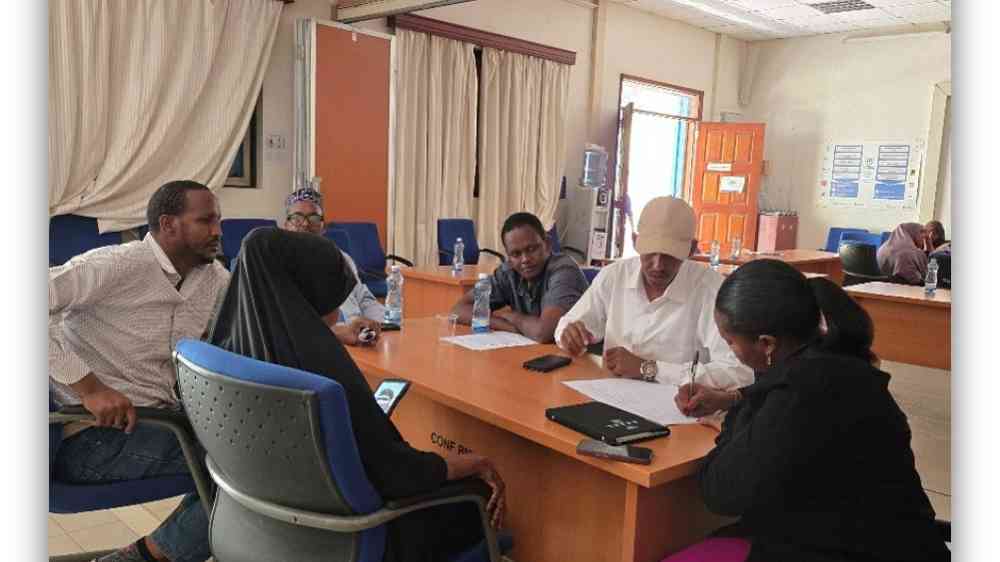
Dadaab participants having a discussion on disaster resilience.
"Dadaab is no longer just a refugee camp-it is evolving into a municipality," said Mr. Mohamed Abdi Ali, Municipal Manager. "This means we must work with all stakeholders and integrate disaster risk in everything we do, to ensure that we develop a resilient sustainable municipality."
Beyond technical planning, the workshop served as a space for healing and hope. Refugee leaders, women's groups, and youth representatives shared stories of loss and resilience, underscoring the human cost of disasters. Their voices shaped the action plan, ensuring it reflects the lived realities of those most at risk.
"This is the first time I've felt truly heard," said Fatuma, a youth leader from the Ifo camp. "We're not just planning for safety; we're planning for dignity."