
Astana Recognized as Central Asia’s First MCR2030 Resilience Hub
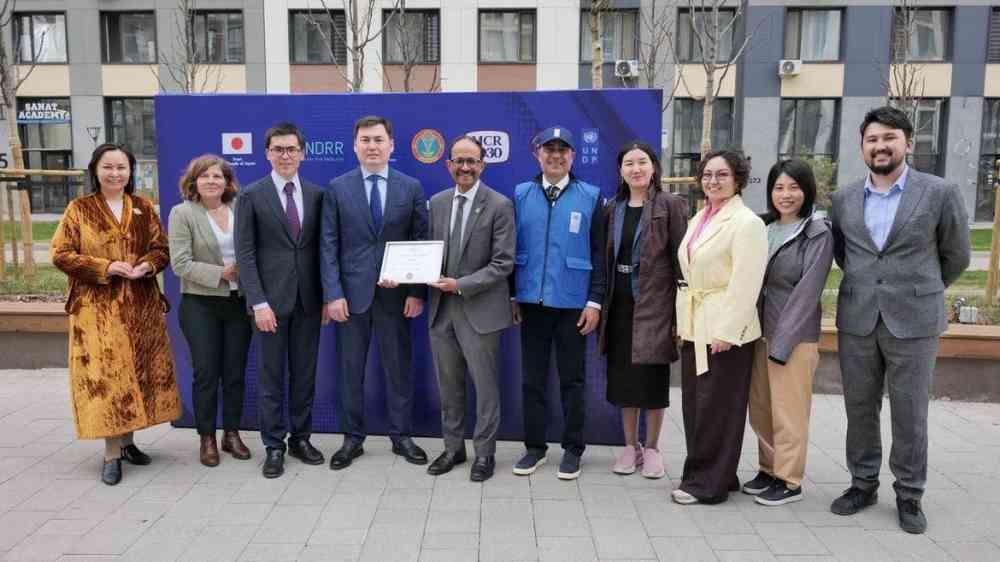
Astana, 21 April 2026 — Astana has been recognized as the first Making Cities Resilient 2030 (MCR2030) Resilience Hub in Central Asia, marking a major step forward for urban resilience in the region and reinforcing the city’s role as a platform for sharing knowledge, innovation and practical solutions with other cities across Central Asia.
The recognition reflects Astana’s long-term commitment to building resilience against disaster and climate risks. The official recognition was marked during a high-level field visit to Greenline Park, organized as part of the partnership between the Akimat of Astana, UNDP, UNDRR and the Center for Urbanism of Astana.
Greenline Park serves as a flagship example of how resilience is being translated into practical urban solutions. Developed as part of Astana’s broader urban transformation, the park is not only a recreational public space but also a multi-functional disaster resilience measure that helps the city respond to increasing climate variability, including extreme temperature fluctuations, heatwaves and urban flooding risks. Through expanded green cover planting many trees, and water bodies to recharge ground aquifers, the park helps reduce urban heat island effects and improves flood prevention, "We strive to make Astana a city for people—modern, comfortable, and safe for every resident. Every plot of land represents a thoughtful decision, designed to ensure the city develops harmoniously and meets the interests of its residents. It's important for us to ensure sustainability and quality of life so that Astana remains a city people want to live in," said Erik Meirkhanov, Deputy Mayor of Astana.
SRSG Kamal Kishore underlined the importance of Astana’s recognition as the first MCR2030 Resilience Hub in Central Asia, appreciating “this has come together through local imagination, local planning as well as a lot of cities across the world, sharing good practices”.
Since 2020, UNDRR has worked closely with Astana’s city administration and the Center for Urbanism to strengthen local resilience capacities. The city conducted comprehensive disaster resilience assessments and strengthened resilience dimensions across key urban planning and disability inclusion processes. Astana has also actively participated in international peer learning through exchanges with Greater Manchester and cities worldwide. These efforts helped position the city as a regional leader in resilience and contributed to its recognition under the global MCR2030 initiative.
This achievement is further strengthened through the UNDP regional project, Enhancing Urban Resilience to Disaster Risk and Climate Change in Central Asia, funded by the Government of Japan. The project supports Central Asian countries in building climate resilience in urban areas by strengthening urban planning, promoting regional cooperation and introducing innovative approaches to managing disaster and climate-driven risks.
As a Resilience Hub, Astana will now serve as a regional platform for peer-to-peer learning and practical cooperation. Over the next years, the city plans to host regional dialogues on urban resilience, develop training modules and guidance on disaster-resilient urban planning, and actively engage in the Central Asian Coalition of Resilient Cities.
As climate and disaster risks continue to grow, Astana’s recognition marks a key milestone for the city, and also for Central Asia, showing how resilience can be built through strong local leadership, international cooperation and practical action on the ground.