
Arab States Mark IDDRR 2026 Through Regional Cooperation and Community-Led Preparedness
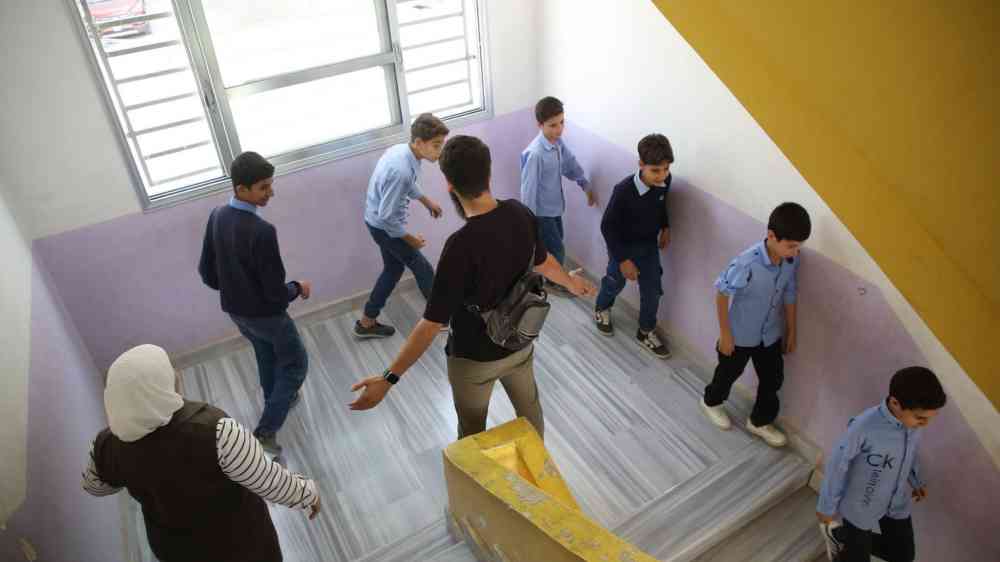
Arab States mark IDDRR 2026 with regional dialogue and community-led preparedness initiatives
Across the Arab region, governments, local authorities, civil society organizations, and communities marked the International Day for Disaster Risk Reduction (IDDRR) on 13 October 2026 under the theme “Resilience Starts at Home.” Activities in Tunisia, Syria, Qatar, and Oman highlighted the importance of strengthening disaster preparedness, promoting inclusive early warning systems, and empowering communities to reduce risks before disasters occur.
From regional policy discussions to school evacuation drills and interactive public exhibitions, the commemorations demonstrated how disaster risk reduction begins with awareness, preparedness, and collective action at the household and community levels.
Regional commemoration in Tunis: From early warning to local action
On 13 October, UNDRR convened the Arab States regional commemoration of IDDRR 2026 in Tunis, Tunisia, as part of the Second Arab Regional Forum on Early Warning Systems and Disaster Preparedness, held from 12–14 October.
The commemoration brought together representatives of Arab governments, United Nations agencies, civil society organizations, the Red Cross and Red Crescent Movement, scientific institutions, youth, and persons with disabilities to discuss how early warnings can translate into practical, locally led action.
Four sessions explored key priorities for strengthening resilience:
- Regional commemoration: Connecting disaster risk awareness, political commitment, and community perspectives under the theme “Resilience Starts at Home.”
- From early warning to early action: Strengthening preparedness, anticipatory action, and community-centered early warning systems, with contributions from the International Federation of Red Cross and Red Crescent Societies (IFRC) and the United Nations Development Programme (UNDP).
- Financing the future of early warning systems: Exploring sustainable investment in multi-hazard early warning systems, including accessible communication and local preparedness.
- Communities at the heart of preparedness: Highlighting the role of local authorities, civil society, youth, persons with disabilities and scientific institutions in designing inclusive, community-led approaches to disaster risk reduction.
Discussions emphasized that effective early warning systems must go beyond delivering alerts. Warnings need to be accessible, understandable, and linked to practical preparedness measures that enable households and communities to act before hazards become disasters.
Participants also highlighted the importance of meaningful inclusion in policymaking, stronger cooperation between scientific institutions and local communities, and sustained financing for locally led resilience efforts.
Watch the Communities at the Heart Session Livestream
Syria: Strengthening preparedness through schools and communities
Across Syria, the Ministry of Emergency and Disaster Management, its governorate directorates and partners organized preparedness and awareness activities, including school evacuation drills, earthquake simulations, community engagement, and preventive field measures.
In Damascus and Rural Damascus, activities included public awareness initiatives and a school evacuation drill in Darayya, where educational and administrative staff received practical training on emergency response procedures.
In Homs, an earthquake simulation at Homs University, conducted in cooperation with the Syrian Arab Red Crescent and the Students’ Union, combined theoretical guidance with practical exercises on evacuation, rescue, first aid, and emergency coordination.
In Aleppo, awareness sessions introduced students to disaster preparedness and fire prevention. An inclusive activity involving children with Down syndrome also provided accessible guidance on fire safety and emergency response.
In Latakia, community organizations and volunteers organized awareness activities in Al-Haffah, including an interactive session, a public mural, and the distribution of preparedness materials. A separate school exercise focused on earthquake response and safe evacuation.
In Tartous, activities combined school awareness sessions on household emergency kits, reliable information, and earthquake safety with preventive field visits addressing flood risks along the Southern Al-Kabir River.
Additional school preparedness activities in Idlib and Al-Hasakah focused on evacuation procedures, first aid, firefighting, and emergency response.
Together, these initiatives demonstrated the importance of engaging educational institutions, local authorities, and communities in building a culture of preparedness.
Watch Syria's Disaster Risk Awareness Activities
Qatar: Promoting household preparedness and disaster risk awareness
Qatar marked IDDRR 2026 by highlighting the role of households and communities in preventing and reducing disaster risks.
The Ministry of Interior, through the General Directorate of Civil Defence, emphasized home safety, emergency preparedness, and the importance of cooperation between individuals, communities, and national institutions.
The Ministry of Environment and Climate Change also highlighted the need to strengthen resilience to natural and climate-related hazards.
These messages complemented Qatar Red Crescent Society's wider disaster preparedness and capacity-building activities in 2026, including its tenth Disaster Management Camp in February, which brought together approximately 300 trainees and 40 trainers.
In October, the Qatar Red Crescent Society, in cooperation with IFRC and with technical support from the Japanese Red Cross, organized a regional workshop on earthquake risk awareness and community communication.
The initiatives reflected Qatar's continued commitment to the Sendai Framework for Disaster Risk Reduction 2015–2030 and international cooperation ahead of its hosting of the ninth Global Platform for Disaster Risk Reduction in 2028.
Qatar Marks the International Day for Disaster Risk Reduction 2026
Oman: Interactive awareness exhibition engages communities in Salalah
In Salalah, Oman, the Salalah Resilience Center marked IDDRR 2026 with an interactive awareness exhibition at the Sultan Qaboos Youth Complex for Culture and Entertainment.
Organized with the participation of 12 government, private sector, and civil society entities, the exhibition welcomed more than 500 visitors, including school students and members of the wider community.
Activities included interactive educational stations, awareness competitions and storytelling sessions designed to communicate practical lessons on risk prevention and emergency preparedness.
The Center also launched a special edition of the children's magazine Murshid , focusing on household safety and disaster risk reduction, alongside an interactive game titled Discover the Risks , encouraging children to identify and avoid hazards in their surroundings.
The exhibition reflected Salalah's commitment to strengthening local resilience following its recognition as a Resilience Hub under the Making Cities Resilient 2030 (MCR2030) initiative.
Watch Salalah's IDDRR 2026 Activities
From awareness to action: Building resilience across the Arab region
The IDDRR 2026 commemorations demonstrated the importance of connecting regional commitments with practical action at the local level.
While discussions in Tunis emphasized inclusive early warning systems, community leadership, and sustainable financing, activities in Syria, Qatar, and Oman translated preparedness messages into practical exercises, institutional initiatives, and public engagement.
Across these efforts, a common message emerged: building resilience requires cooperation among governments, local authorities, scientific institutions, civil society, and communities, ensuring that individuals and households have the knowledge, resources, and support needed to act before disasters occur.
Under the theme “Resilience Starts at Home,” IDDRR 2026 reinforced that preparedness begins locally, but depends on collective responsibility and sustained investment to protect lives, homes, and livelihoods.