
UNDRR Roundtable Explores Practical Pathways to Strengthen Supply Chain Resilience in an Era of Complex Risks
Geneva, May 2026 – Global supply chains are facing a new generation of interconnected risks. These range from climate-driven disruptions and geopolitical tensions to cyber threats and infrastructure vulnerabilities. Yet despite growing awareness of these threats, many organizations still struggle to translate risk information into operational and strategic decisions.
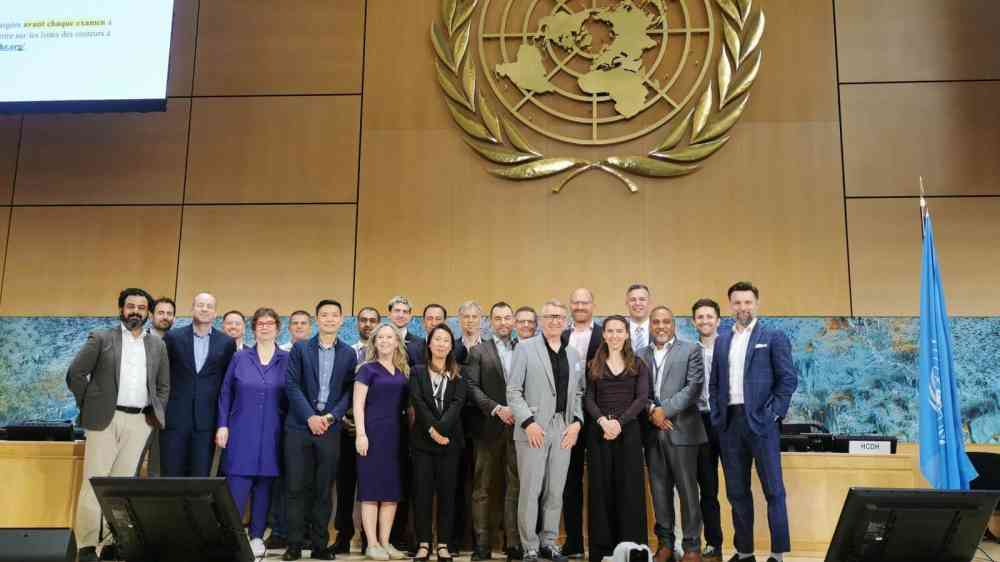
To explore this challenge, the United Nations Office for Disaster Risk Reduction (UNDRR), together with the Corporate Chief Resilience Officers (CCRO) Network and Group Resilience, convened a high-level roundtable on strengthening supply chain resilience on 8 May at the Palais des Nations in Geneva.
Held under Chatham House Rules, the in-person discussion brought together resilience, risk, security, logistics, aviation, finance, insurance, academic, and public-sector leaders to exchange practical perspectives on how organizations can better anticipate and manage systemic disruptions.
Opening the discussion, participants emphasized that supply chain resilience is no longer only a business continuity issue, but increasingly linked to economic security, social stability, and disaster risk reduction.
“Disaster and climate risk information already exists. The challenge is that it still rarely changes how supply chain decisions are made,” said Abhilash Panda, Deputy Chief of the Intergovernmental Processes, Interagency Cooperation and Partnerships Branch at UNDRR. “We need to close the gap between understanding risk and acting on it operationally.”
The roundtable explored how global supply chains are being reshaped by compound and systemic risks, including climate-related hazards, geopolitical tensions, cyber threats, and infrastructure vulnerabilities. Participants discussed where the most critical vulnerabilities lie, why risk information does not always translate into operational decisions, and what challenges require collective action beyond individual organizations.
Key themes included the need to improve visibility beyond Tier-1 suppliers, address concentration risks, strengthen decision-making and governance, and better connect finance, insurance, and procurement incentives to resilience outcomes. Participants also emphasized that resilience failures are often organizational and behavioural, not only technical.
The discussion identified three possible areas for follow-up: developing a shared resilience intelligence approach for supply chain decision-making, exploring a sectoral supply chain stress-test pilot, and advancing public-private policy dialogue on disaster risk in supply chain governance.
The roundtable also highlighted the potential role of UNDRR as a neutral convener to support practical collaboration between companies, public institutions, and technical partners. Proposed next steps include scoping a concept note for a possible Dependency Observatory, identifying participants for a stress-test pilot, and exploring engagement with emerging policy processes such as the EU Preparedness Union Strategy.
UNDRR will continue engaging with interested partners to translate the discussion into practical follow-up actions that support more resilient, transparent, and risk-informed supply chains.